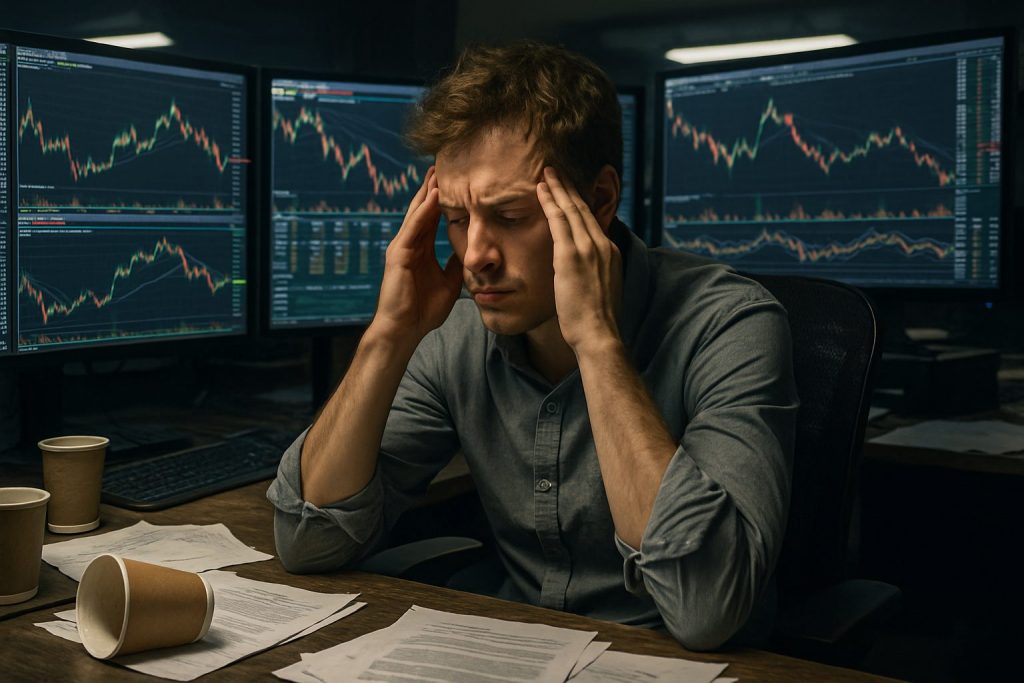
Can day trading lead to burnout? Yes — day trading can lead to burnout when chronic stress, financial pressure and poor work-life balance accumulate.
Day traders who spend long hours glued to charts often face a mix of intense focus and high stakes that can erode wellbeing over weeks or months. The combination of constant decision-making, rapid losses or gains, and the pressure to perform creates a fertile ground for trader fatigue and emotional exhaustion. Signs range from sleep disruption and brain fog to anger at small market moves and withdrawal from social life. Left unchecked, these symptoms damage not only performance but also relationships and physical health. Practical fixes exist: structured trading windows, enforced breaks, realistic expectations, deliberate recovery weeks, and disciplined risk management. The following sections map causes, concrete prevention habits, and a practical recovery plan tailored to the realities of modern intraday trading, with checklists, tables, and real-world examples to help sustain long-term mental health and trading psychology. For additional reading on the emotional risks of active intraday work, see this analysis: https://tradingpriceactiononfutures.com/can-day-trading-cause-depression/
How day trading causes burnout: mechanics of stress in intraday work
Day trading amplifies stress through sustained cognitive load, financial pressure, and relentless market noise. These combine to create a cascade of symptoms often labeled as burnout in trading psychology discussions.
- Constant high-attention tasks produce mental fatigue and reduce decision quality.
- Volatile outcomes (wins/losses) trigger emotional rollercoasters that erode confidence.
- Perceived lack of control—markets move outside plans—heightens anxiety and rumination.
| Driver | Typical effects | Short-term risk |
|---|---|---|
| Extended screen time | Headaches, eye strain, decision paralysis | Impulsive trades, missed signals |
| Financial pressure | Anxiety, compulsive trading | Over-leveraging, blowups |
| Isolation | Withdrawal from social life, rumination | Poor emotional regulation, depressive symptoms |
Example case: a hypothetical trader named Alex began trading full-time and extended the trading window to chase volatile spikes. Within six weeks, performance deteriorated—small losses triggered angry revenge trades, sleep quality fell, and relationships frayed. The insight: unchecked intraday intensity shifts the balance from skill execution to emotional reactivity.
Recognizing the signs early
Spotting symptoms early prevents prolonged decline. Monitoring behavior and mood is as important as analyzing charts.
- Motivation drop: trading feels like a chore, learning stagnates.
- Short fuse: small market moves provoke outsized reactions.
- Physical symptoms: headaches, sleep changes, appetite shifts.
| Sign | What to track | Immediate action |
|---|---|---|
| Brain fog | Journal clarity, mistake frequency | Stop trading, rest, reduce size |
| Overtrading | Number of daily trades vs plan | Reinstate rules, set max trades |
| Withdrawal | Missed social plans | Schedule non-trading activities |
Key insight: burnout is behavioral as much as physiological. Early detection and a clear stop-rule protect capital and relationships.
Practical strategies to prevent burnout and protect mental health
Prevention is a set of disciplined habits that reduce risk exposure and preserve mental capital. The goal is sustainable edge rather than daily heroics.
- Define a focused trading window and stick to it—quality over quantity.
- Use strict risk management rules to limit emotional swings.
- Schedule regular unplugged breaks: daily micro-breaks, weekly days off, quarterly recovery weeks.
| Prevention habit | Why it helps | Practical tip |
|---|---|---|
| Fixed trading hours | Reduces decision fatigue | Trade only during a 2–4 hour high-edge window |
| Micro-breaks | Resets attention regularly | Stand and stretch every 60 minutes |
| Journaling emotions | Improves self-awareness | Log mood and bias after sessions |
An actionable routine: choose one high-volatility window (for example, a market open) and limit active trading to that period. Back this with a rule: if three consecutive trades break the plan, stop for the day. This removes the “must-trade” pressure and protects capital.
Insight to carry forward: building structure around trading—like an athlete’s training plan—turns rest into a performance tool rather than a luxury.
Recovery plan: step-by-step routine for stressed day traders
When burnout is present, a staged recovery avoids impulsive returns and rebuilds resilience. The following plan is pragmatic and measurable.
- Immediate pause: stop trading for 48–72 hours to break the reactivity loop.
- Assessment week: review the last 30 days of trades and emotional logs without judgment.
- Rebuild with reduced size and a clear checklist before re-entering the market.
| Stage | Action | Goal |
|---|---|---|
| Pause | 48–72 hours no trading | Reduce acute stress and regain sleep |
| Reflect | Trade review + emotional journal | Identify triggers and rule breaches |
| Rebuild | Resume with 50% size, strict checklist | Test clarity and consistency |
Practical example: Alex took a planned week off after a losing streak. During the pause, the journaling process revealed a pattern—revenge trades after losing two in a row. The fix was a clear rule: after two losers, stop and review. Returning with half-size trades improved decision making and reduced stress.
Final recovery insight: treating rest as a strategic part of trading operations preserves capital and supports long-term success. For deeper reading on emotional risks and depression linked to active trading, consult this resource: https://tradingpriceactiononfutures.com/can-day-trading-cause-depression/
Additional resources and reminders:
- Revisit https://tradingpriceactiononfutures.com/can-day-trading-cause-depression/ for perspective on mental health impacts.
- Use scheduled reviews: monthly, quarterly, yearly—measure progress, not just P&L.
- Consider peer groups focused on process, not P&L comparisons.
Key operational takeaway: sustainable trading depends on managing the trader, not just the strategy. Protecting mental health is a core part of risk management and long-term edge.
Further reading and tools: visit https://tradingpriceactiononfutures.com/can-day-trading-cause-depression/ and bookmark it for reflection during recovery planning. Also keep that link handy when building a personal wellness checklist: https://tradingpriceactiononfutures.com/can-day-trading-cause-depression/
Regular reminder: if stress escalates into prolonged depressive symptoms or severe sleep loss, seek professional help; mental health is an essential part of trading psychology and performance. For a practical reset, start with this short guide and sample checklist found here: https://tradingpriceactiononfutures.com/can-day-trading-cause-depression/
Questions and answers to common concerns
Can cutting trading hours really prevent burnout?
Yes. Shorter, focused trading windows reduce cognitive load and help maintain emotional equilibrium. Many traders limit active work to high-edge periods to reduce mistakes and stress.
Is burnout permanent for day traders?
No. Burnout can be reversible with structured breaks, honest self-review, and staged re-entry. However, prolonged neglect of mental health can cause longer-term issues.
How does risk management tie into mental health?
Strong risk rules cap loss exposure and limit emotional swings. When size and leverage are controlled, stress decreases and decision-making improves.
Should a trader take professional help for trader fatigue?
Yes if symptoms include persistent insomnia, severe anxiety, or depressive signs. Combining professional support with trading routine changes yields the best outcomes.
Where to learn more about the psychological impacts of intense trading?
Start with dedicated analyses like https://tradingpriceactiononfutures.com/can-day-trading-cause-depression/, and join peer groups that prioritize process and mental health over daily P&L.

With over a decade of experience navigating global financial markets, I specialize in identifying trends and managing risk as a professional trader. My passion for economics drives my daily commitment to staying ahead in this fast-paced industry. Outside of the markets, I enjoy exploring technology like cryptocurrencies and new investment strategies.