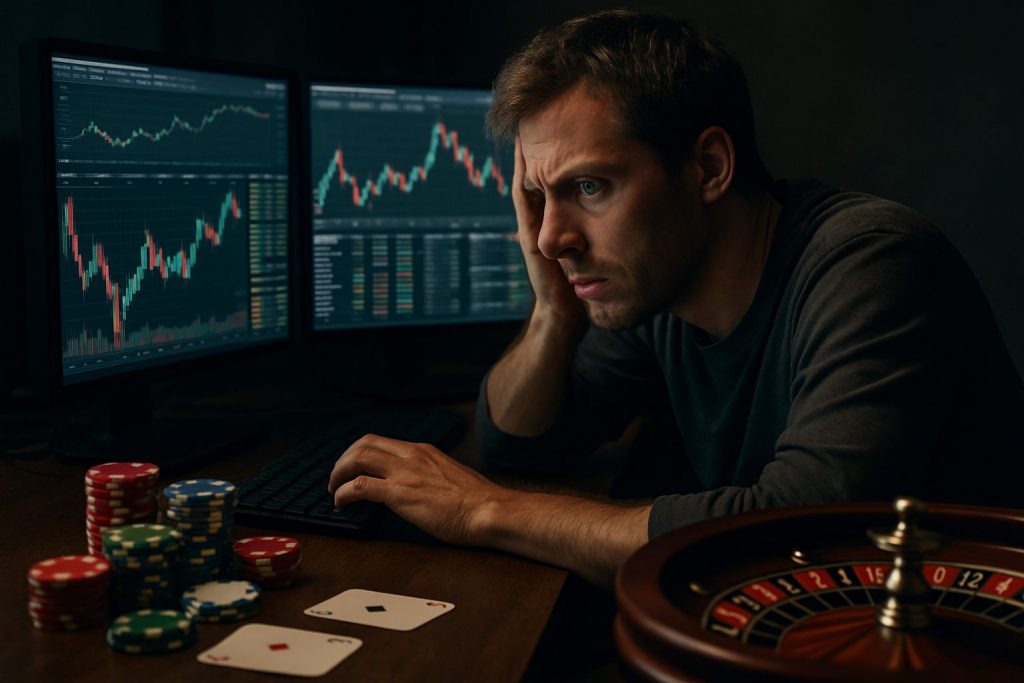
Day trading can be addictive like gambling for some traders, driven by similar reward loops and risk-taking impulses.
Day trading sits at the crossroads of fast-paced decision making and emotional intensity. In modern markets, the constant stream of charts, alerts and micro-wins creates an environment where compulsive behavior can flourish. Traders like the fictional Alex—who began trading to supplement income—may find small wins trigger dopamine bursts, then chase losses with greater risk. This pattern mirrors classic gambling cycles: thrill, reward, loss, and the urge to recover. The pressure of capital at stake, combined with the anonymity of online platforms and 24/7 exposure to financial news, magnifies stress and heightens investor psychology vulnerabilities. Understanding the mechanics—how rapid feedback, variable rewards and social proof shape habits—helps distinguish disciplined strategy from behavioral addiction. Below are practical analyses, psychological insights, and concrete tools to identify and manage addictive tendencies in the world of financial markets.
How day trading becomes addictive like gambling: mechanics and triggers
Fast feedback loops and unpredictable outcomes make day trading especially prone to addictive dynamics. Small, frequent wins reinforce behavior; losses provoke risk-taking to recoup capital. Alex first noticed trading sessions turning into long, emotionally charged marathons.
- Variable rewards: unpredictable profits mimic slot-machine payoffs.
- Instant feedback: charts and ticks provide immediate reinforcement.
- Loss-chasing: attempts to recover losses increase impulsivity.
| Trigger | Effect on behavior | Example |
|---|---|---|
| Small wins | Reinforce trading frequency | Executing multiple scalps after a profitable trade |
| Large loss | Prompts risk escalation | Doubling position size to chase a reversal |
| 24/7 news feeds | Continuous arousal and distraction | Late-night trades driven by headlines |
Example case: Alex placed five rapid trades after a small gain and ended the day down. This illustrates how risk-taking and reward-seeking loop together. Insight: recognizing triggers is the first step to breaking the cycle.
Investor psychology and behavioral addiction in financial markets day trading
Psychological patterns behind trading addiction overlap with clinical descriptions of behavioral addiction. Cognitive biases, such as overconfidence and illusion of control, warp decision-making. Alex felt certain patterns would “guarantee” profits—an example of how belief systems fuel harm.
- Overconfidence: inflates position size and frequency.
- Confirmation bias: filters information to justify trades.
- Emotional regulation failure: trading becomes a mood management tool.
| Psychological factor | Behavioral sign | Mitigation |
|---|---|---|
| Loss aversion | Holding losing positions too long | Predefined stop-loss rules |
| Dopamine-driven reward | Compulsive checking of P&L | Scheduled screen breaks and app limits |
| Social proof | Copying high-risk trades | Independent verification and journaling |
Clinical research links intense, repetitive behaviors with measurable brain changes; the same neural pathways involved in gambling can light up during intense trading sessions. For deeper reading on the mental health impact, see resources like Can day trading cause anxiety? and Can day trading ruin your mental health?. Insight: awareness of cognitive traps enables targeted behavioral changes.
Managing risk-taking and building healthy trading habits to avoid compulsive behavior
Practical systems reduce the chance that trading habits degrade into compulsive behavior. Alex restructured routines: fixed session times, strict risk per trade, and mandatory breaks. Such frameworks shift decision-making from emotion to rules.
- Set fixed risk limits: limit capital at stake per trade.
- Use checklists: trade only when setup matches predefined criteria.
- Monitor psychology: log emotions and P&L in a daily journal.
| Tool | Function | How to use |
|---|---|---|
| Stop-loss orders | Automated loss control | Set based on percentage risk per trade |
| Trading journal | Track decisions and emotions | Record setup, outcome, and emotional state |
| Accountability partner | External oversight | Share monthly performance and rules adherence |
Practical resources and platforms can help implement these tools. Consider backup demo accounts for practice, and research brokers with responsible trading features such as limit orders. For platform options and educational materials, explore Pocket Option, Quotex, and Olymp Trade. Insight: structure and reflection convert impulsive sessions into sustainable practice.
Questions traders commonly ask about day trading and addiction
- Can day trading become a behavioral addiction?
Yes—when trading is used compulsively for emotional reward rather than disciplined strategy, it shares features with behavioral addiction such as loss of control and persistent risk-taking.
- What signs indicate trading has become like gambling?
Signs include chronic loss-chasing, neglecting obligations, constant urge to trade, and using trading to escape stress. Keeping a journal helps reveal these patterns.
- How can one reduce compulsive trading habits?
Implement strict risk rules, scheduled trading hours, accountability checks, and offline periods. Behavioral changes are most effective when combined with practical tools like stop-losses and demo practice.
- Where to find help or further reading?
Start with psychological resources and articles on trading mental health—see Can day trading cause anxiety? and Can day trading ruin your mental health?—and consider peer support or professional counseling where needed.

With over a decade of experience navigating global financial markets, I specialize in identifying trends and managing risk as a professional trader. My passion for economics drives my daily commitment to staying ahead in this fast-paced industry. Outside of the markets, I enjoy exploring technology like cryptocurrencies and new investment strategies.