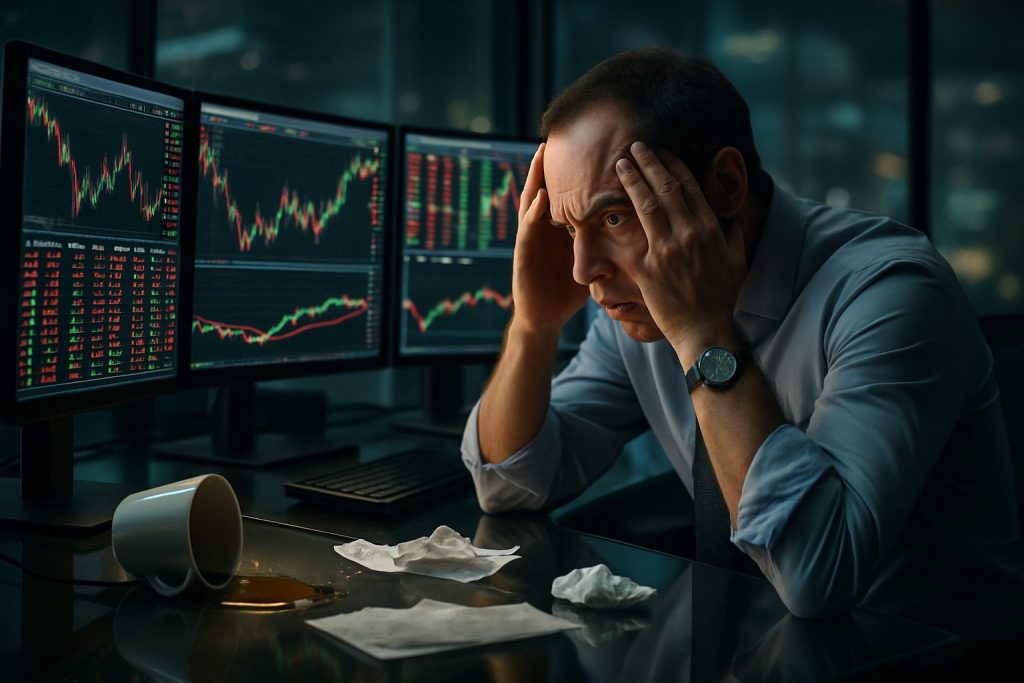
Is day trading stressful? Yes — day trading is often stressful, especially when market volatility and high stakes collide with personal pressure.
Day trading compresses intense decisions into tight windows, and that pressure can quickly feel overwhelming. A retail trader staring at a screen experiences immediate feedback: gains and losses occur in real time, creating an emotional rollercoaster. Personal life stressors — unpaid bills, relationship strain, or a demanding job — frequently migrate into the trading routine, turning an account into a symbolic battleground for control and worth. Many platforms such as Pocket Option, Quotex, and Olymp Trade make access easy, which amplifies temptation and pressure for those testing trading strategies without robust risk rules. Expectation mismatches — like aiming for unrealistically high returns — push traders toward impulsive behavior that increases anxiety and erodes discipline. This overview frames why day trading causes stress and points to concrete ways to build emotional control, stronger risk management, and healthier trading habits.
Why day trading is stressful: day trading stress and market volatility
Markets move with little regard for personal calendars or feelings. Sudden news, macro swings, and liquidity gaps produce market volatility that forces split-second decisions. The result is a recurring cycle where the trader’s nervous system reacts before reason does.
- Immediate feedback creates intense emotional highs and lows.
- Illusion of control pushes traders to overtrade in search of agency.
- Privacy and isolation remove social checks that might curb impulsive actions.
| Source of Stress | Typical Effect on Trading | Quick Mitigation |
|---|---|---|
| Market volatility | Overreaction, slippage, missed exits | Use stop-losses, reduce position size |
| Personal life stress | Poor focus, revenge trading | Trade only during calm windows, journal emotions |
| Unrealistic profit targets | Over-leveraging, risk-taking | Set realistic goals, consult performance history |
Example: A part-time trader named Maya treats a loss as a personal failure after a family dispute; she increases trade size to “win back” money, which compounds losses. Recognizing the pattern is the first step toward stopping it.
Insight: Understanding why the market triggers stress offers the best starting point for changing behavior and restoring composure.
Day trading anxiety and trading psychology: emotional control for traders
Emotional responses often drive poor execution more than lack of technique. Trading psychology covers the internal market — sleep, diet, ego, and past experiences — that shapes decisions on the screen. Addressing this inner landscape reduces trader anxiety and supports consistent trading strategies.
- Journaling emotions during trades reveals recurring reactive patterns.
- Nervous system regulation (breathing, HRV tracking) blunts fight-or-flight impulses.
- Health habits (sleep, exercise, diet) sharpen decision-making ability.
| Psychological Issue | How it Manifests | Practical Tool |
|---|---|---|
| Big ego | Refusal to take small losses | Accountability partner, scripted exit rules |
| Over-aggression | Too many positions, revenge trading | Limit daily trades, pre-market checklist |
| Fear / paralysis | Under-trading, missed setups | Tick-based practice, small-size entries |
Practical anecdote: A novice who read about high monthly returns online adjusted expectations after reviewing realistic case studies like “can you make 1000 a month day trading?” and “how much do most beginners lose day trading?” which shifted focus from chasing big wins to building discipline. See resources: Can you make $1,000 a month day trading? and How much do most beginners lose day trading?
Insight: Emotional control is as much technical preparation as it is mental training; both are required to reduce anxiety in the long term.
Risk management and trading strategies to reduce investment pressure
Effective risk management transforms the experience from gambling-like tension into a controlled process. Structured strategies give the nervous system permission to stay calm because outcomes no longer feel existential.
- Position sizing rules limit the emotional impact of each trade.
- Clear stop-loss and take-profit plans remove guesswork under pressure.
- Realistic performance targets prevent unhealthy risk-taking.
| Strategy | Stress Level | Why It Helps |
|---|---|---|
| Fixed fractional sizing | Low | Caps loss per trade, predictable drawdowns |
| Time-based exits | Medium | Stops prolonged exposure during volatile windows |
| Scaled entries | Medium | Reduces emotional pressure to be perfect on entry |
Important links for setting expectations and recovery planning include guides on realistic weekly/monthly outcomes and worst-case scenarios. Useful reads: Can you make $2,000 a week day trading?, Can you make $5,000 a month day trading?, and tips about recovering after large losses: Can I recover if I lose everything in day trading?.
Bonus practical check: verify tax and credit implications of losses before risking large sums — see resources like Can day trading losses affect your taxes? and Can day trading ruin your credit?.
Insight: Risk rules and realistic strategy selection turn investment pressure into manageable operational steps, lowering day-to-day stress.
Common questions traders ask
Is it normal to feel anxious while day trading?
Yes, anxiety is a normal response to fast feedback and financial risk. Structuring trades with clear position sizing and using emotion journals helps normalize that response and reduce its power over decisions.
How much can a beginner realistically make without excessive stress?
Beginners should prioritize capital preservation and learning over income. Reviews of realistic outcomes like How much can you make per month day trading? show a wide range; starting with modest targets and small sizes keeps stress manageable.
Can day trading losses lead to financial ruin?
Significant losses can be damaging, but careful risk controls and recovery plans reduce the chance of catastrophic outcomes. See guidance on extreme cases: Can day trading bankrupt you?.
What immediate steps calm trader anxiety during a losing streak?
Pause trading, perform a quick emotion check, use breathing to downregulate, and review the trade journal to ensure decisions remain aligned with the plan. Small procedural halts prevent emotional spirals.
Are there platforms that reduce stress through design?
Some platforms like Pocket Option, Quotex, and Olymp Trade provide demo accounts and clear trade logs that assist learning and reduce pressure by allowing practice without real money exposure.

With over a decade of experience navigating global financial markets, I specialize in identifying trends and managing risk as a professional trader. My passion for economics drives my daily commitment to staying ahead in this fast-paced industry. Outside of the markets, I enjoy exploring technology like cryptocurrencies and new investment strategies.