Why do beginners trade too often? Because beginners trade too often mainly from emotional trading, lack of discipline, and weak risk management that fuel impulsive decisions and inflate trading frequency.
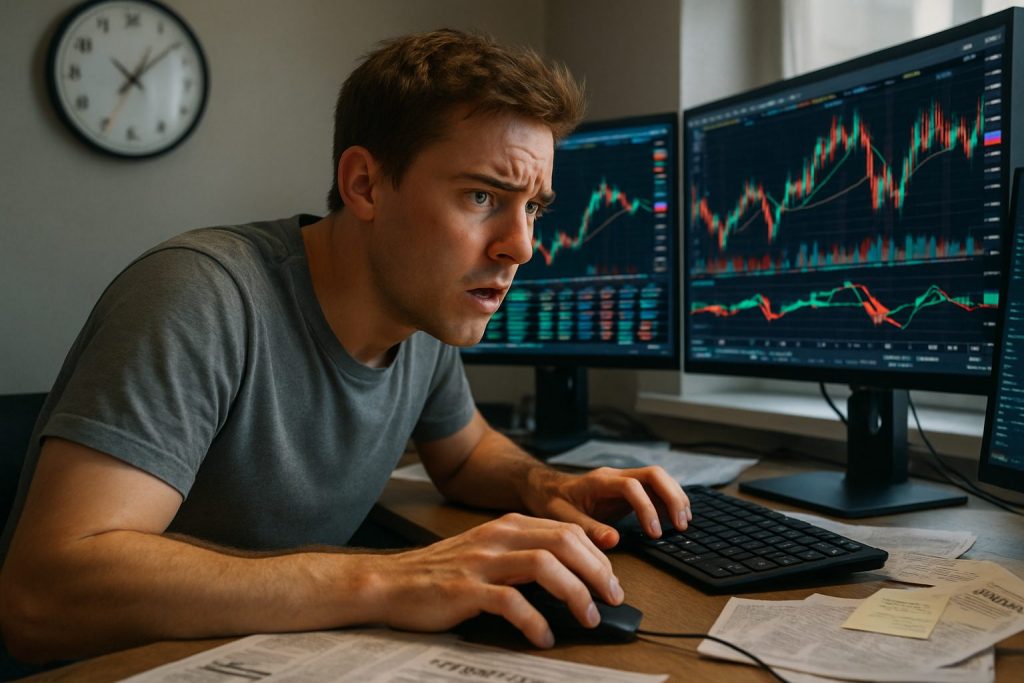
In the crowded, noisy world of retail trading, new entrants often confuse activity with progress. Markets reward patience and edge, not a high count of trades. A typical newcomer—call them Alex—starts with curiosity and ambition, watches prices move, and quickly mistakes movement for opportunity. Without clear rules, Alex drifts into overtrading: more trades driven by fear of missing out than by verified setups. This pattern shortens the learning curve the wrong way, burning mental energy and amplifying emotional trading. The result is predictable: account erosion, stress, and stalled development. The good news is that understanding the mix of causes—poor trade psychology, inadequate risk management, and limited market experience—enables structured fixes. Practical steps exist to reduce impulsive decisions, control trading frequency, and build the kind of discipline that turns raw interest into sustainable skills. Below are causes, examples, and concrete rules to help beginners trade less and trade better.
Day Trading Frequency | Why Do So Many Beginners Over-Trade?
Overtrading stems from a cluster of avoidable behaviors. Beginners often believe that more trades equal more profit, but higher trading frequency usually increases costs and reduces edge. Alex, practicing forex scalps, became convinced that every tick was an “opportunity.” That mindset led to frequent low-quality entries and rapid account deterioration.
- Common causes: fear of missing out, boredom, and the myth that frequent trading compounds returns.
- Behavioral signs: scalp trades without plan, breaking session limits, and chasing setups across markets.
- Immediate effects: lower win-rate, increased commissions/spreads, and faster drawdowns.
When trading frequency rises without improved edge, the account usually loses before skills improve.
How emotional trading fuels trading frequency
Emotional trading is the engine of impulsive decisions. Feelings like anxiety after a loss, greed after a win, or impatience during slow markets push beginners into action. Alex would increase position size after a losing streak, hoping to recover quickly—classic revenge trading.
- Triggers: recent losses, social media hype, and news events.
- Manifestations: removing stop losses, deviating from the plan, and experimenting with too many indicators.
- Consequences: higher trading frequency, degraded discipline, and mental fatigue.
Emotional trading magnifies trading frequency and destroys consistency; controlling emotions is the first defense.
Trade psychology and market experience: why skill matters more than action
Market experience refines timing and reduces the urge to act on every signal. Novices lack the pattern recognition and execution confidence that slow down trading frequency responsibly. Alex learned that patience and a clear edge produce fewer trades but higher-quality outcomes.
- Trade psychology elements: confidence, patience, and acceptance of small losses.
- Learning curve tips: focus on structured repetition, review, and measurable progress.
- Practical rule: limit setups per session and track why each trade was taken.
Improving market experience shortens the harmful part of the learning curve and lowers unnecessary trading frequency.
Discipline & risk management | Practical rules to stop overtrading
Discipline and risk management are the operational guards against overtrading. Without them, even a good strategy collapses under impulsive behavior. Alex adopted simple rules—daily trade caps, fixed stop-losses, and strict position sizing—that immediately reduced trading frequency and stabilized performance.
- Core prescriptions: set a daily trade limit, always place a stop loss, risk a small fixed % per trade.
- Behavioral aids: use a timer to check charts, step away after 2 losses, and keep a short emotion log.
- Account-level rules: define daily max drawdown and enforce mandatory breaks.
Small, consistent rules protect capital and train discipline faster than random high-frequency activity.
| Common Beginner Mistake | Why it increases trading frequency | Concrete fix |
|---|---|---|
| Chasing every move | Belief that every price movement is an edge; impulsive entries. | Set criteria for valid setups; limit to 3 high-quality trades/day. |
| No stop-loss | Leads to panic, revenge trades, and increased frequency to recover losses. | Always set a stop-loss based on market structure; risk 1% or less per trade. |
| Too much leverage | Small moves cause large emotional reactions and frequent position adjustments. | Reduce leverage; use position sizing aligned with account size and rules. |
| No journal | Repeats mistakes; no feedback loop to reduce unnecessary trades. | Maintain a trade journal and review weekly to refine the edge. |
Concrete daily checklist to cut impulsive decisions and accelerate the learning curve
A short, repeatable routine reduces frequency while improving outcomes. Alex switched to a checklist approach that turned impulsive habits into measurable progress. The checklist became an accountability anchor when emotions rose or markets got messy.
- Pre-session: review macro context, pick 1–2 markets, set max trades for session.
- Entry rules: confirm setup, set stop and target, size position per risk rule.
- Post-trade: record reason, emotion, and execution notes in a journal.
- Daily cap: stop trading after the set number of trades or the daily drawdown limit.
Following a compact checklist turns trading frequency into a controlled variable that reflects skill, not anxiety.
For wider reading on how trading strain affects performance and mental health, explore resources that examine burnout and financial stress in day trading:
- Can day trading lead to burnout?
- Can day trading cause financial stress?
- Can day trading cause anxiety?
- Can day trading ruin your mental health?
- Why do beginners blow up their accounts?
- How do beginners avoid panic during trades?
- What are the biggest mistakes beginners make in day trading?
Common questions beginners ask about trading frequency
Why do beginners feel they must trade every market move? Many beginners confuse volatility with opportunity; without a clear edge, every move looks tradable. Restricting markets and setups reduces noise and unnecessary actions.
How can beginners reduce overtrading today? Implement immediate rules: daily trade cap, fixed stop-loss on every trade, and a simple journal. These reduce impulsive decisions and help enforce discipline.
Is high trading frequency ever advantageous for beginners? Only if it’s part of a proven, repeatable edge and the trader has low transaction costs, excellent execution, and strong psychological control. For most beginners, lower frequency with higher-quality setups is superior.
What role does risk management play in stopping overtrading? Strong risk management (small % per trade, daily drawdown limit) prevents emotional escalations that drive frequency. It forces survival-first behavior that shortens the harmful portion of the learning curve.
Where to read more about the psychological effects of overtrading? Start with focused articles on trading stress and recovery, such as those linked above, which discuss burnout, anxiety, and practical mitigation strategies.

With over a decade of experience navigating global financial markets, I specialize in identifying trends and managing risk as a professional trader. My passion for economics drives my daily commitment to staying ahead in this fast-paced industry. Outside of the markets, I enjoy exploring technology like cryptocurrencies and new investment strategies.