
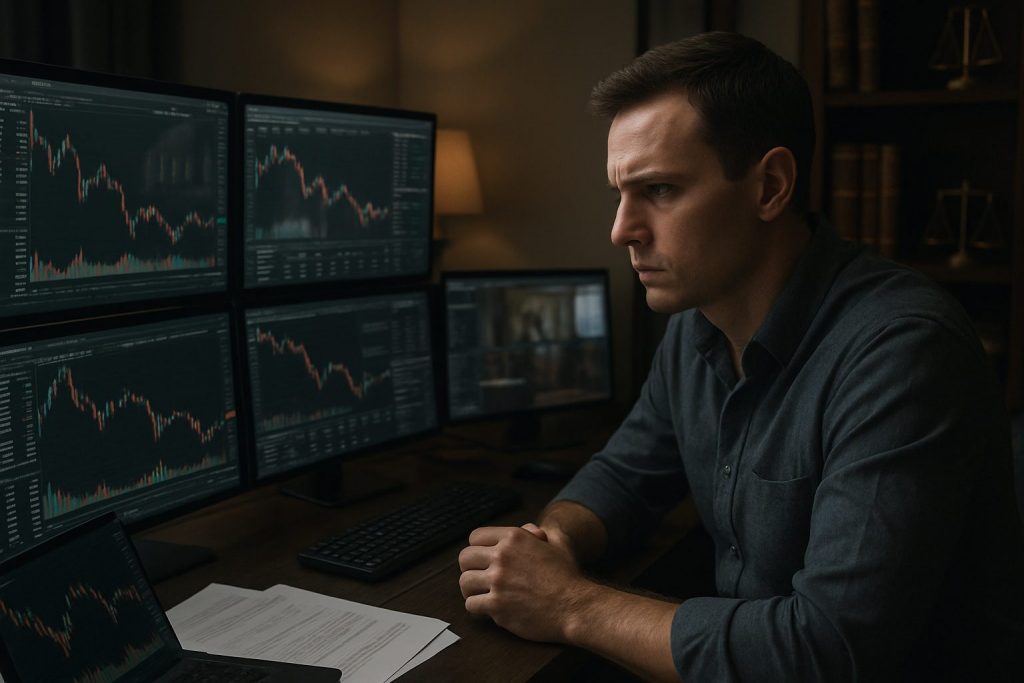
Can I get in legal trouble for day trading? Short answer: Day trading itself is not illegal, but one can get in legal trouble for breaking regulations, committing insider trading or market manipulation, or ignoring tax liabilities and brokerage requirements.
The world of day trading sits between opportunity and strict oversight. In many jurisdictions a legitimate trader follows clear trading rules and financial compliance steps; trouble appears when actions cross into deceptive or unreported behavior. This piece explains why day trading can trigger regulatory or criminal scrutiny, which securities laws are most relevant, and what practical habits reduce the chance of legal trouble. It focuses on accessible platforms such as Pocket Option, Quotex, and Olymp Trade, and offers step-by-step precautions for newcomers who want to trade responsibly. The tone is calm and encouraging: trading can be learned without risking reputation or liberty, provided rules are understood, positions are sized conservatively, and records are kept for tax and compliance. Read on for jurisdictional differences, actionable checklists, platform comparisons, and a closing set of clear next steps to keep activity lawful and focused on steady progress.
When can day trading lead to legal trouble? — common regulatory traps and illegal acts
Day trading becomes legally risky when it involves deliberate market abuse, bypassing brokerage requirements, or failing to meet tax reporting. Regulators treat intent and pattern of behavior as decisive: isolated mistakes are usually handled differently from systematic abuse.
- Market manipulation — spoofing, layering, pump-and-dump, and wash trades are prosecuted in many markets.
- Insider trading — trading on material non-public information can trigger criminal charges under securities laws.
- Non-compliance with broker rules — e.g., margin infractions, repeated ignored margin calls, or violating platform-specific terms.
- Tax evasion or poor reporting — unreported gains or misclassification of trading income attracts audits and fines.
| Illegal/Non-compliant Action | Typical Consequence | How to Avoid |
|---|---|---|
| Spoofing / layering | Fines, account bans, criminal charges | Use honest order placement; avoid rapid cancel/repost cycles |
| Insider trading | Criminal prosecution, imprisonment, heavy fines | Never trade on non-public material information |
| Ignoring margin calls | Forced liquidation, account restrictions | Keep conservative leverage and maintain a cash buffer |
| Unreported taxes | Audits, penalties, interest | Keep trades documented; consult a tax professional |
Key insight: Intent and pattern matter more than single mistakes; record-keeping and transparent behavior greatly reduce legal exposure.
Regulations and securities laws to watch as a day trader
Different regulators emphasize different priorities, but most focus on market integrity and investor protection. Traders should learn local rules and the financial compliance expectations that apply to their accounts and assets.
- Understand how national authorities classify day traders and what thresholds trigger extra rules.
- Know anti-market-abuse statutes that prohibit manipulation, insider trading, and deceptive order practices.
- Verify broker reporting obligations and how suspicious activity is escalated to regulators.
| Jurisdiction | Main regulatory focus | Actionable trader step |
|---|---|---|
| United Kingdom | Client suitability, leverage caps, market abuse enforcement | Read FCA guidance and keep robust records (is-day-trading-legal-in-the-uk) |
| European Union | MiFID II investor protection, best execution, anti-abuse rules | Confirm platform compliance and export trade history regularly |
| Australia & Others | Surveillance, disclosure, significant penalties for manipulation | Follow ASIC guidance and avoid opaque cross-border schemes |
Practical note: Check the interaction between local tax law and securities law; many problems arise from mismatched record-keeping rather than deliberate fraud. For questions about jurisdiction-specific rules, see resources on is-day-trading-legal-in-the-us and is-the-pdt-rule-the-same-in-all-countries for comparative context.
Key insight: Prioritize learning the securities laws that affect account classification, leverage, and market abuse definitions in the trader’s primary jurisdiction.
Practical steps to avoid legal trouble when day trading
Concrete routines and documented habits separate safe traders from those at risk of regulatory action. Start with small, measurable processes that become daily disciplines.
- Practice on demo accounts before risking capital; platforms such as Pocket Option, Quotex, and Olymp Trade provide demo modes to learn mechanics.
- Prefer cash accounts when uncertain about margin rules; verify how your broker applies day-trading limits.
- Keep a trading journal recording rationale, entry/exit, and screenshots to support tax filings and dispute resolution.
| Step | Why it matters | Example action |
|---|---|---|
| Use demo first | Removes legal & financial exposure while learning | Complete 50 simulated trades on Pocket Option demo |
| Set loss limits | Prevents emotional overtrading that triggers margin issues | Hard daily stop at 1–3% of capital |
| Document everything | Creates audit trail for tax and compliance checks | Export monthly trade history and keep receipts |
Extra resources: Read practical guides such as can-i-start-day-trading-with-a-small-account-and-grow-it and consider implications of tools like VPNs or offshore brokers before using them (can-i-day-trade-with-a-vpn, can-i-day-trade-with-offshore-brokers).
Key insight: Small, consistent habits — demo practice, strict loss limits, and detailed records — are the best defense against accidental regulatory trouble.
Platform selection, brokerage requirements and risk controls
Choosing a compliant broker and matching account type to strategy reduces surprises. Only platforms with clear rules, demo modes, and exportable histories should be used by beginners focused on safety.
- Confirm minimum deposits, demo availability, and how the platform handles margin calls.
- Prefer brokers that offer easy trade history exports for tax reporting and dispute evidence.
- Avoid platforms that encourage opaque incentives or coordinated promotions that could be construed as collusion.
| Platform | Demo | Typical minimum | Beginner suitability |
|---|---|---|---|
| Pocket Option | Yes | Low (often small deposits) | High — demo-focused learning and simple UI |
| Quotex | Yes | Low | Good — accessible tools, clear terms |
| Olymp Trade | Yes | Low | Good — educational resources and demo |
Note: These platforms are examples for beginners seeking accessible entry points; always read the platform’s terms and verify local regulatory standing.
- Check how quickly margin notifications are sent and whether forced liquidations can happen without prior notice.
- Verify whether the platform supports easy export of trade logs for tax advisors.
- Ask support for written clarification on any rule that is unclear.
Key insight: Platform choice shapes the compliance landscape — favor demo-capable brokers with transparent rules like Pocket Option, Quotex, and Olymp Trade and always keep records ready for tax and regulator questions.
Next steps — immediate actions to reduce legal risk: maintain a demo-first habit, keep conservative position sizing, document every trade, and consult a local tax or compliance advisor before scaling. For deeper reading on mental health and trading resilience, see can-day-trading-ruin-your-mental-health. For questions about avoiding PDT via ETFs or registrational queries, consult can-i-avoid-the-pdt-rule-by-trading-etfs and do-i-need-to-register-with-finra-to-day-trade for background references.
Questions traders ask most
- Which behaviors most often trigger enforcement?
- How can trade logs protect a trader during an audit?
- Which platform features reduce compliance risk?
Final thought: Treat financial compliance and record-keeping as part of every trade — the discipline that preserves capital also preserves freedom.
Can making many day trades lead to account freezes?
Yes. In some markets high-frequency day trading can trigger account restrictions or special classifications; always check how your broker enforces activity limits (is-the-pdt-rule-the-same-in-all-countries).
Is short selling or leveraged day trading illegal?
Short selling and leveraged trading are generally legal but regulated; they require adherence to margin rules and may be restricted in volatile conditions. Avoid margin until experienced and capitalized.
How should tax liabilities be managed?
Keep exportable trade histories and consult a tax professional for correct classification of gains. Accurate, timely filing avoids most legal headaches related to trading income.
Can using a VPN or offshore broker hide activity?
Using a VPN or offshore broker does not eliminate legal obligations and can increase scrutiny; transparency and compliance with local law remain essential (can-i-day-trade-with-a-vpn, can-i-day-trade-with-offshore-brokers).
Is day trading legal in the UK?
Yes, but traders must follow FCA rules on suitability, leverage, and market abuse; see is-day-trading-legal-in-the-uk for guidance.
FAQ
Can accidental mistakes lead to criminal charges?
Accidental errors are typically handled as civil or administrative matters if corrected promptly; persistent or deceptive patterns that indicate intent are the primary path to criminal charges.
How long should trade records be kept?
Retention periods vary by jurisdiction, but keeping detailed records for several years is advisable to cover tax audit windows and dispute resolution.
Are demo accounts safe for learning compliance?
Yes. Demo accounts on platforms such as Pocket Option, Quotex, and Olymp Trade help practice order types, stop-losses, and record-keeping without legal exposure.
When should a trader consult a lawyer or tax advisor?
Seek professional advice before scaling capital, using complex derivatives, or if facing a broker investigation or tax audit.
Where to learn more about rules by country?
Start with jurisdictional guides and the comparative resources listed earlier; for cross-border questions, specialized local counsel is essential. Helpful starting links include is-day-trading-legal-in-the-us and do-i-need-to-register-with-the-nfa-to-trade-forex.

With over a decade of experience navigating global financial markets, I specialize in identifying trends and managing risk as a professional trader. My passion for economics drives my daily commitment to staying ahead in this fast-paced industry. Outside of the markets, I enjoy exploring technology like cryptocurrencies and new investment strategies.