
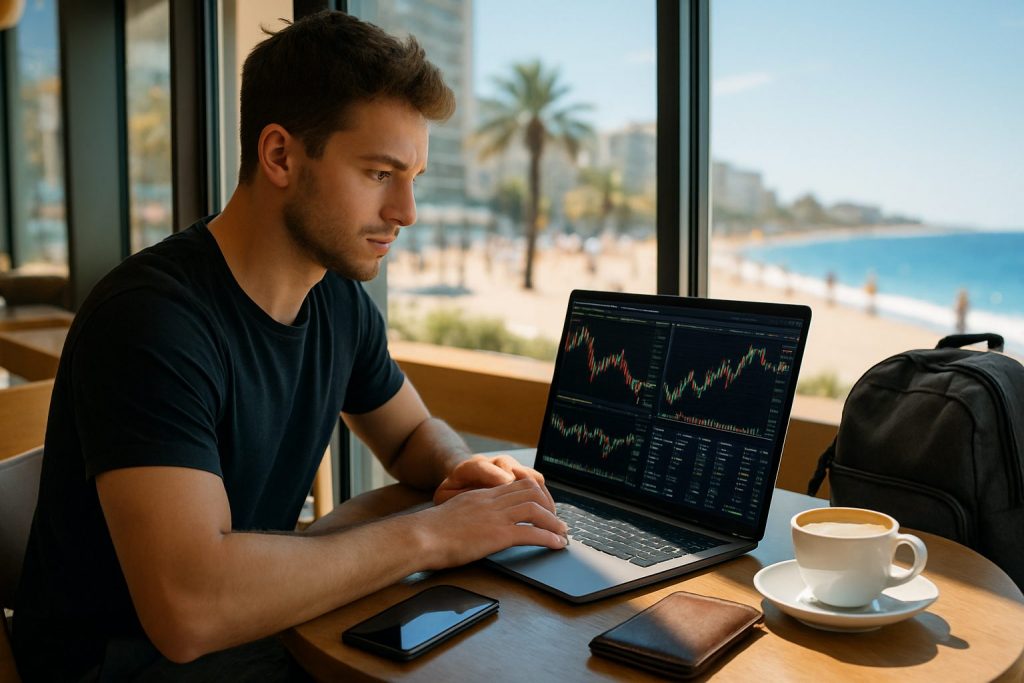
Can I day trade while traveling? Yes — day trade while traveling is possible with preparation, reliable internet access, and disciplined routines that suit shifting time zones.
Traveling and day trading often collide: the desire for financial freedom meets the reality of hotel Wi‑Fi, late nights and changing market hours. This guide distills practical rules for remote trading from the road, focusing on what keeps the account intact and the vacation enjoyable. Expect checklists for communications, technology and workflow, plus concrete tips on using mobile trading apps and automation. Realistic examples and a traveler-trader persona illustrate tradeoffs: trades that demand constant monitoring versus setups that tolerate gaps. Links to troubleshooting resources (VPNs, backup internet and alerts) are embedded for quick access. The emphasis is on risk control — smaller positions, preset orders and strong security — so that trading supports travel rather than hijacks it. Read on for step-by-step tactics that help preserve both leisure time and trading discipline while navigating the stock market from anywhere.
Day trading while traveling: a practical checklist for traders
Before leaving, set up a compact system that answers three core questions: how to reach support, how to keep devices powered and connected, and how to limit downside if connectivity fails. The checklist below turns those questions into actions.
- Communications: emergency broker contacts, app notifications, and news feeds.
- Connectivity: primary internet, backup mobile data, and a VPN for secure mobile trading.
- Risk controls: smaller position sizes, stop/limit orders, and automated alerts.
- Workflow: set trading windows aligned to market hours, use longer timeframes when appropriate.
- Security: device passwords, two-factor authentication, and encrypted connections.
| Challenge | Action | Recommended tools |
|---|---|---|
| Unreliable internet | Have a mobile hotspot, portable battery and a verified backup plan. | Backup internet guide, local SIM, power bank |
| Security risks on public Wi‑Fi | Always use a VPN and avoid public networks for order entry. | VPN when traveling, broker app with 2FA |
| Time zone mismatch | Plan trading windows, shift to longer timeframes, or automate entries/exits. | Trading alerts, limit orders, and calendar reminders |
| Device failure | Carry a secondary device and charger; sync chart setups beforehand. | Device checklist, backup laptop/tablet |
Technology and connectivity essentials for remote trading
Reliable connectivity is the backbone of mobile trading. A plan that assumes occasional outages and provides instant mitigation is non-negotiable. Test connections before taking live trades from a new location.
- Primary internet: confirm hotel or Airbnb speed in advance and prefer wired connections where possible.
- Secondary internet: carry a local SIM or portable hotspot and understand data limits.
- Security tools: use a reputable VPN and enable two-factor authentication on the online brokerage app.
Practical resources help remove ambiguity: check guides about whether a VPN is suitable for trading and the minimum internet needs for day trading. These references explain trade-offs and setup steps.
- Can I day trade with a VPN?
- Do I need high-speed internet for day trading?
- Can I day trade with Wi-Fi?
Insight: redundancy beats speed — a slightly slower, reliable backup is better than a flaky “fast” connection when risk is on the line.
Workflow, time zones and trading strategies on the road
Travel changes the rhythm of trading. Aligning trading windows with market sessions and picking strategies that tolerate interruptions reduces stress. Shift to setups that can be managed with alerts and automation when sightseeing is the priority.
- Schedule trade windows: pick predictable hours that match the stock market sessions relevant to chosen assets.
- Prefer higher timeframes: hour or daily setups require less screen time than scalping.
- Automate and alert: use price alerts, conditional orders and trailing stops to enforce discipline.
Some traders pivot to swing-style or momentum setups that allow for controlled entries and exits without constant attention. Resources explaining alerts and pre-market access can guide adjustments to strategy.
Insight: strategy choice dictates lifestyle — the less a setup demands constant attention, the more it blends with travel.
Broker interaction, support and security while on the road
Broker support becomes crucial when trading from abroad. Before departure, confirm how to reach your online brokerage and what emergency channels exist for order placement or account access issues.
- Confirm support hours: verify customer service availability relative to your destination time zone.
- Save contact methods: phone numbers, in-app chat, and a backup email for emergencies.
- Use regulated broker apps: if using brokers like Pocket Option, Quotex or Olymp Trade, confirm mobile app features and security options before travel.
- Avoid public Wi‑Fi for order entry: use personal hotspot or VPN and never trade over unsecured networks.
Practical reading on device choice and connectivity helps with pre-trip planning. A cheap laptop can sometimes be enough if configured correctly, but preparedness matters more than raw specs.
Insight: broker familiarity and reachable support reduce panic — a pre-arranged contact path saves precious minutes during incidents.
Common questions about day trading while traveling
Can day trading be done reliably from a hotel or café?
Yes, but reliability depends on internet access and security. Always test the connection, use a VPN, and switch to mobile data if public Wi‑Fi is unstable. If persistent issues arise, pause live trading and rely on automation or alerts until a stable setup is available.
Should position sizes be reduced when traveling?
Yes. Reducing position sizes is a core risk-control measure when away from a dedicated trading setup. Smaller positions lower stress and limit drawdowns if connectivity or attention lapses occur.
Which trading strategies work best on the move?
Strategies that tolerate interruptions work best: swing trades, trend-following on hourly charts, or momentum setups that use preset entries and stops. Avoid scalping unless the environment matches home-grade connectivity and focus.
How to handle time zones and market hours?
Map local time to your target market sessions and create a fixed trading window. Where possible, shift to longer timeframes or automate orders for sessions that fall during sightseeing hours.
What safeguards prevent account compromise while traveling?
Use strong passwords, 2FA, a reputable VPN, and keep broker contact details offline. Inform the broker of travel plans if the platform supports travel notifications to avoid account locks and speed up support when needed.
Final insight: With preparation, redundancy and disciplined risk controls, day trading while traveling supports both market engagement and personal freedom — but the real win is preserving the trip while keeping the account resilient.

With over a decade of experience navigating global financial markets, I specialize in identifying trends and managing risk as a professional trader. My passion for economics drives my daily commitment to staying ahead in this fast-paced industry. Outside of the markets, I enjoy exploring technology like cryptocurrencies and new investment strategies.