
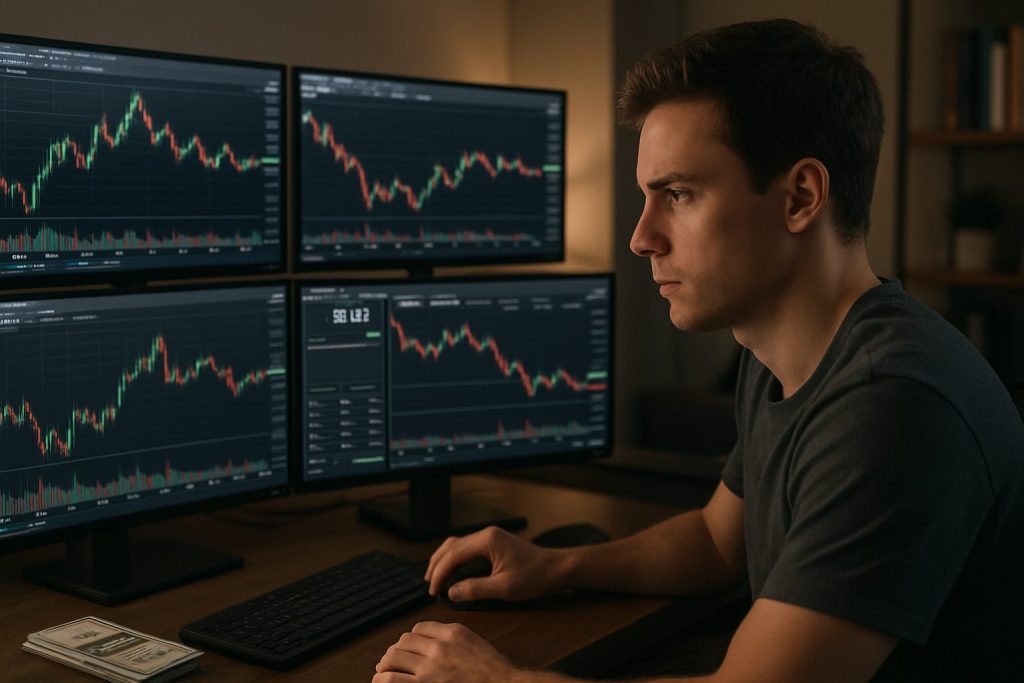
Can I day trade on Interactive Brokers with $100? Yes — it is possible to open a trading account and attempt day trading on Interactive Brokers with $100, but expect strict limits from minimum deposit realities, trading fees, margin trading restrictions and relevant financial regulations. This content is for non-US residents.
Opening a path into the stock market with only a hundred dollars is realistic on paper, yet the practical levers — platform rules, order execution, and cost drag — shape outcomes. For traders starting with a small balance, the challenge is to balance size, risk, and costs while learning execution discipline. Interactive Brokers provides professional-grade tools, low commissions, and multi-asset access (equities, forex, futures, crypto in many jurisdictions), but a tiny account must reckon with limited leverage, higher effective proportional fees, and the psychological pressure of small margin for error. Below are clear, actionable sections explaining what to expect, how to set up a practical approach, and how to measure risk versus reward when day trading with $100.
Can I day trade on Interactive Brokers with $100 — practical expectations for small accounts
Starting with $100 on Interactive Brokers means trading in a constrained environment. Execution quality is excellent, yet the economics change: trading fees and minimums become a larger share of returns, and some platforms limit margin for low balances. It’s essential to understand whether a trading account is cash or margin, and what that implies for intraday activity.
- Account type: cash accounts prohibit margin day trades; margin accounts may be restricted by the broker’s internal policies.
- Trading fees: fixed fees and exchange fees hit small accounts harder, eroding gains.
- Order size: buying fractional shares or low-priced instruments reduces per-trade impact.
| Factor | Impact on a $100 account | Practical tip |
|---|---|---|
| Minimum deposit | Usually low (sometimes $0–$100), but effective capital remains tiny | Confirm IBKR regional minimums and choose cash vs margin |
| Trading fees | Proportional cost is high relative to gains | Use low-cost order types and avoid excessive churn |
| Margin & leverage | Limited for small accounts; margin can increase risk | Avoid borrowed money until skills are proven |
Execution realities: spreads, slippage, and order routing
Even with a small balance, the mechanics of execution matter. Tight spreads and fast routing help, but small position sizes mean slippage and fees can wipe gains quickly. Awareness of order types (limit, market, stop) is crucial.
- Use limit orders to control entry and exit prices.
- Avoid market orders in thinly traded instruments where slippage is common.
- Check IBKR’s order routing and available exchanges in your jurisdiction.
Insight: With $100, priorities are preservation of capital, mastering execution, and minimizing cost per trade.
How to set up a trading account and practical steps to day trade with $100 on Interactive Brokers
Setting up a trading account must start with paperwork, KYC, and selecting the right account features. For many non‑US residents, account setup is straightforward, but regulatory differences can affect available products and margin levels.
- Choose between a cash account (no margin) and a margin-enabled account (subject to approval).
- Fund with an amount that covers both trades and fees — 100 leaves almost no buffer.
- Practice in a demo or paper-trading environment before risking real capital.
| Step | Why it matters | Estimated time |
|---|---|---|
| Account registration | Completes KYC and selects account type | 30–60 minutes |
| Funding | Ensures purchasing power; consider transfer fees | Same day–3 business days |
| Platform setup | Charting, hotkeys, and default order types set up | 1–2 hours |
Practical example: A trader opens an IBKR account, funds it with $100, and focuses on liquid low-priced names or fractional shares to keep position sizes manageable. Discipline around order size and fixed stop levels protects capital.
Costs, funding and alternative pathways
Funding methods, FX conversion fees, and platform minimums vary by country. Consider the full cost chain before making trades. For some traders, using smaller-ticket instruments or broker features that allow fractional investing reduces entry barriers.
- Check deposit fees and currency conversion charges.
- Compare trading fees vs expected edge: high churn kills small accounts.
- Consider demo practice and studying whether day trading is sustainable for a given risk profile (is day trading sustainable as a career?).
| Cost type | Effect on $100 account | Mitigation |
|---|---|---|
| Commission & exchange fees | Can erase small profits | Trade less frequently, use fractional shares |
| Funding/currency fees | Reduce effective buying power | Fund in local currency or use low-fee transfer methods |
| Platform subscription | Extra overhead for advanced data | Only enable paid data when necessary |
Insight: With limited capital, every fee matters — aim for a clean, low-cost plan and measure progress weekly.
Risks, rules, and alternative strategies when trading with $100
Risk management is the single most important skill when starting small. Margin trading and leverage amplify outcomes but can quickly wipe a tiny account. Additionally, local financial regulations influence what is allowed for non-US residents, including available instruments and margin multipliers.
- Avoid high leverage until a clear edge is proven; borrowed money increases downside.
- Use strict position sizing: consider risking no more than 1–2% per trade on a tiny account.
- Explore micro- or fractional-share trading and low-cost instruments to preserve capital.
| Risk area | Why it matters | Practical control |
|---|---|---|
| Leverage | Magnifies losses; margin calls can force liquidation | Keep leverage minimal; prefer cash trades initially |
| PDT and regulatory rules | Pattern-day trading rules affect US accounts (not applicable to all non-US residents) | Confirm local rules and broker policy for day trading |
| Emotional risk | Small accounts magnify stress, provoking overtrading | Employ rigid checklists and trading plans |
- Read on structural topics like whether day trading is manipulated or sustainable (is day trading manipulated by big players?).
- Decide whether to scale slowly; resources like “Can I start day trading with $100?” help set expectations (can I start day trading with $100?).
- If considering borrowed funds, consult materials on safety of using margin (is it safe to day trade with borrowed money?).
Insight: The realistic pathway is to treat $100 as a learning fund — optimize execution, minimize fees, and grow capital methodically rather than seeking immediate large returns.
Alternatives and resources
If direct day trading on a tiny Interactive Brokers account proves too costly, consider learning via paper trading or researching brokers and instruments that match low-deposit strategies. For those curious about returns, see further analyses on potential earnings scenarios (how much can i make day trading with 100? and how much can i make day trading with 100000?).
- Use paper trading and educational content intensively.
- Consider brokers and instruments compatible with fractional shares and low commissions.
- Study alternatives for low-deposit trading like micro futures, where permitted.
Insight: Knowledge and execution beat brute force capital; start small, measure progress, and scale when consistent edge appears.
Key resources: For market structure, broker comparisons and niche topics such as penny-stock day trading or crypto day trading, explore resources like what broker is best for penny stock day trading? and what broker is best for crypto day trading?. For general guidance on starting with no minimum, see what broker has no minimum deposit for day trading?.
Short case study: a disciplined non-US trader with $100
A fictional trader in 2025 opened a small IBKR account with $100, practiced two months in a demo, and focused on one liquid, low-volatility instrument. Trades were limited to a strict risk of 1% per trade. Execution costs were tracked and reduced by using fewer intraday trades. Over a year, capital grew modestly but the biggest gains were in discipline and trade planning.
- Lesson: Execution and costs matter more than frequency.
- Lesson: Psychological control reduces impulsive losses.
Insight: Start with a plan; the account is a training ground first, not a fast path to wealth.
Further reading: For deeper context on career sustainability and manipulation concerns in day trading, consult the linked materials above and explore whether the chosen approach fits long-term goals.
Questions & answers
Can a non-US resident avoid pattern-day trading (PDT) restrictions on Interactive Brokers?
Yes — PDT is a US regulatory rule applying to US margin accounts; non‑US residents should confirm local broker policies and account types because rules vary by jurisdiction and IBKR entity.
Is $100 enough to cover trading fees and still make meaningful gains?
Realistically, small accounts struggle to overcome proportional trading fees and slippage. It is possible but requires low-frequency, high-discipline trading and careful fee management.
Should leverage be used on a $100 account?
Using leverage or margin trading on such a small balance drastically increases risk; most practitioners recommend proving a strategy in cash or demo before using borrowed funds (is it safe to day trade with borrowed money?).
What broker features matter most for small-account day traders?
Low commissions, fractional shares, tight spreads, robust order types, and transparent fee structures are critical. Execution quality should be prioritized over bells and whistles.
Where to learn realistic return expectations?
Review case studies and analyses such as how much can i make day trading with 100? and maintain realistic growth targets aligned with risk management.

With over a decade of experience navigating global financial markets, I specialize in identifying trends and managing risk as a professional trader. My passion for economics drives my daily commitment to staying ahead in this fast-paced industry. Outside of the markets, I enjoy exploring technology like cryptocurrencies and new investment strategies.