
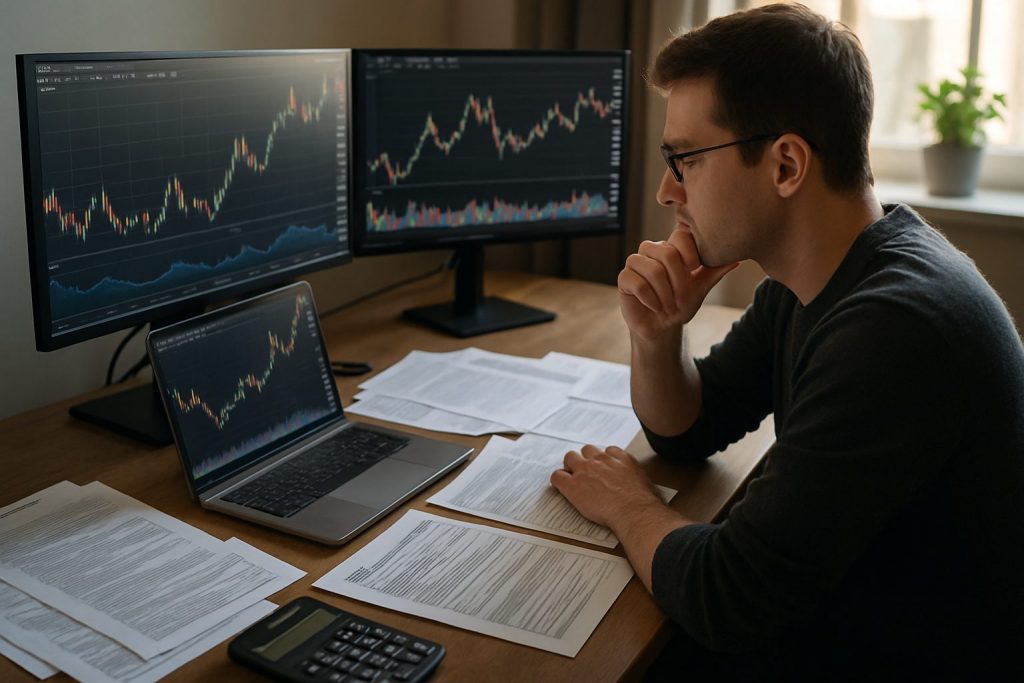
Do I need to report day trading every year? Yes — day trading must generally be reported every year in which any trading income or losses are realized, following local tax reporting rules.
Day trading creates a constant stream of realized profits and losses, and most tax systems require annual disclosure of those results. Reporting obligations depend on classification (investor vs. trader), the types of instruments traded, and local financial regulations. Platforms such as Pocket Option, Quotex, and Olymp Trade can supply trade histories that simplify investment reporting and support tax compliance. Traders should keep precise records of every trade, fees, and associated expenses to prepare an accurate annual report and avoid surprises during audits. Understanding whether gains are treated as ordinary trading income or as capital gains is essential because it affects rates, allowable deductions, and whether special rules (like mark-to-market or wash-sale equivalents) apply. Below are practical sections to guide preparation, comparisons across jurisdictions, and suggested record-keeping practices to stay on top of tax obligations.
Day trading tax reporting: what triggers an annual report
Realized trades in the calendar year typically trigger the need to file an annual report. The requirement is not about how many trades were made, but whether gains or losses were realized and whether local law recognizes trade activity as taxable.
- Realized trading income — Profits from closed positions must be reported in the tax year they are realized.
- Realized losses — Losses usually reduce taxable income, but treatment varies by jurisdiction.
- Classification — Being classified as a professional trader or investor affects allowable deductions and reporting forms.
| Jurisdiction | Typical reporting vehicle | Treatment of short-term gains | Notes / Links |
|---|---|---|---|
| Australia | Annual tax return; business vs investor rules | Short-term gains taxed as income | How day trading profits are taxed in Australia |
| Canada | Annual return; business income if trading commercially | Can be treated as business income or capital gains | Canada overview |
| Europe | Varies by country — check local financial regulations | Often treated as capital gains, sometimes as trading income | Europe overview |
| United Kingdom | Self-assessment; possible business classification | Short-term gains usually treated as income or capital gains depending on status | UK overview |
| India | Annual return; special treatment for intraday as business income | Intraday often taxed as business income | India overview |
Key insight: Annual report obligations depend on where the trader is tax resident, and the same realized profit in different countries can be taxed differently.
How to prepare your annual tax reporting for day trading
Preparation reduces stress and preserves capital. The most reliable approach is consistent record-keeping and early organization of trading records ahead of the annual report deadline.
- Collect trade confirmations — Export CSVs or PDF statements from Pocket Option, Quotex, or Olymp Trade each month.
- Track cost basis and fees — Include commissions, spreads, and platform fees to compute net trading income.
- Separate accounts — Use distinct accounts for personal investing and active trading to simplify reporting.
| Item | Recommended record |
|---|---|
| Trades | Date, instrument, entry/exit price, size, fees |
| Expenses | Software subscriptions, educational costs, data feeds |
| Bank transfers | Deposits and withdrawals tied to trading accounts |
Practical tip: Keep both digital and backed-up copies of records; many tax platforms and accountants accept uploads directly from brokers. This simplifies tax compliance and reduces the chance of missing items during the annual report.
Common reporting pitfalls to avoid
Simple mistakes can trigger audits or missed deductions. Attention to detail is the best protection.
- Ignoring foreign tax rules — Cross-border trades may create extra obligations.
- Mismatched records — Ensure broker statements reconcile with calculated gains/losses.
- Overlooking platform fees — Fees reduce taxable gain but must be documented.
Final thought: Consistency in logging trades prevents surprises and makes annual tax reporting much more manageable.
Special rules and elections that change tax reporting for day trading
Some regimes offer elections or special accounting that change how trading income appears on an annual report. Learning whether such options exist locally can alter tax obligations materially.
- Mark-to-market alternatives — Certain jurisdictions or specific trader elections treat open positions as if sold at year-end, simplifying reporting and impacting capital gains rules.
- Wash-sale equivalents — Rules that limit loss claims when repurchasing similar instruments soon after a sale can affect net loss deduction timing.
- Instrument-specific rules — Forex, futures, and CFDs may follow different tax treatments than stocks.
Reference resources: For international comparisons and further reading, consult articles on how day trading profits are taxed in different countries, such as Australia, Canada, and Europe. These summaries can help determine if an election or special treatment applies in the relevant jurisdiction.
Closing insight: Explore available elections early — some require timely filings or specific documentation to take effect for the annual report.
Practical checklist for the day trader’s annual report
A concise checklist helps ensure nothing is missed at filing time.
- Export monthly trade histories from Pocket Option, Quotex, or Olymp Trade.
- Reconcile trades with bank statements and fees.
- Classify trades by type (day trades, swing trades, long-term holds).
- Review country-specific guidance: Income vs capital gains.
- Decide whether a mark-to-market-like election is beneficial and feasible.
- Consult a local tax professional for jurisdictional specifics.
Key take-away: Organized records and early planning reduce the stress of meeting annual tax obligations and improve tax compliance.
Additional resources and reading to help with tax compliance
Further reading clarifies nuances and helps compare tax obligations across regions. Useful resources include guides on whether taxes are owed on profits or losses, and how losses can be deducted or carried forward.
- Do I have to pay taxes on day trading profits?
- Do I have to pay taxes if I lose money day trading?
- Can I deduct day trading losses from my taxes?
- How are day trading profits taxed in the US? (useful for comparative study of IRS requirements, but not targeted to US residents)
Practical insight: Learning from international summaries often highlights strategies and record-keeping best practices that apply across borders.
FAQ
Do all realized trades need to be listed individually on the annual report?
Many jurisdictions require detailed records of each trade for audit support, though summary reporting formats may be accepted if backed by broker statements. Always check local investment reporting rules.
Can trading losses be used to offset other income?
That depends on whether trading is classified as business income in the jurisdiction. Some countries allow offsetting against other income; others limit loss use and allow carryforwards instead.
Is a mark-to-market-style election available everywhere?
No — availability varies by country. Where offered, it can simplify annual tax reporting and remove certain loss-timing rules, but elections often require timely procedures.
How long should trading records be kept?
Keep records for the period required by local tax laws (commonly 5–7 years) and longer if carryforwards or complex cost-basis adjustments are involved.
Should traders use trade-tracking software or a tax professional?
Both are recommended: software streamlines annual report preparation and a local tax professional ensures compliance with specific tax obligations and financial regulations.

With over a decade of experience navigating global financial markets, I specialize in identifying trends and managing risk as a professional trader. My passion for economics drives my daily commitment to staying ahead in this fast-paced industry. Outside of the markets, I enjoy exploring technology like cryptocurrencies and new investment strategies.