Do most day traders lose money? Yes — most day traders lose money.
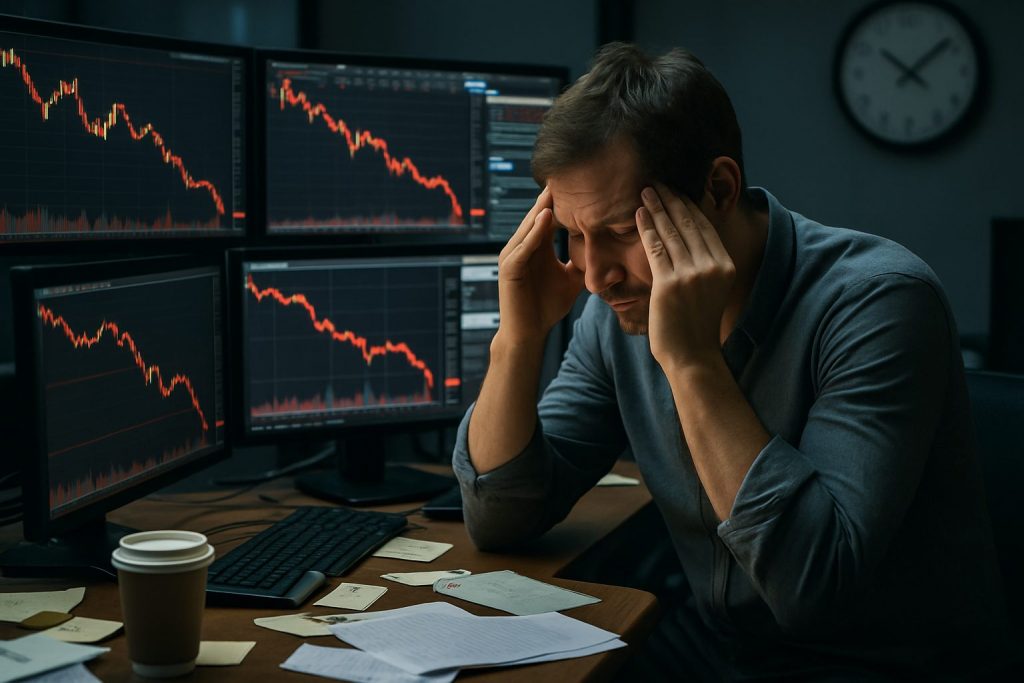
Most day traders lose money, and the data up to 2025 paints a sobering picture: only a tiny fraction consistently turns a profit, while the majority experience persistent losses after fees, taxes, and slippage. Market volatility and modern algorithm-driven order flow have raised the bar for retail traders, making profitability rarer than ever. Behavioral traps—overconfidence, poor risk management, and chasing quick gains—explain much of the gap between expectation and reality. Yet a small group of disciplined, well-equipped traders manage to extract consistent returns by combining robust trading strategies, strict money management, and rapid execution. This piece follows the journey of a fictional retail trader, Alex, to show why losses happen, what the data reveals, and which practical changes reduce the odds of failure. Along the way, readers will find actionable references on risk-reward, stop-loss behavior, diversification in intraday trading, tax impacts of losses, and whether trading with borrowed funds or automated systems helps beginners survive the learning curve.
What percentage of day traders lose money? Data and studies up to 2025
Aggregated research across markets indicates a clear pattern: most day traders lose money. Multiple large-sample studies show that only about 1–3% of day traders consistently outperform passive benchmarks, while studies of active retail populations often report yearly loss rates well above 70–90%.
- Study summaries show that more than 95% — and in many samples up to 97% — of day traders fail to net consistent profits after costs.
- High activity typically correlates with larger net losses, though a tiny elite of high-volume traders can be consistently profitable.
- Many traders continue despite losing streaks, driven by overconfidence and the search for a breakout win.
| Metric (2025 view) | Typical range | Implication |
|---|---|---|
| Percentage who lose money (net) | 70%–97% depending on market/sample | Day trading is generally unprofitable for most retail participants. |
| Consistent outperformers | 1%–3% | Often professionals with superior edge and infrastructure. |
| Dropout within 2 years | ~80% | High churn — many quit after early losses or frustration. |
Key insight: the raw percentages reveal a market where profitability is rare and survival requires more than simple rules of thumb.
Why day trading leads to losses: psychology, fees, and market structure
Losses arise from three converging forces: human psychology, transaction costs, and market mechanics. Each amplifies the others, turning small edge deficits into persistent negative results.
- Trading psychology: Overconfidence and loss aversion push traders to overtrade and to hold losers too long.
- Fees & slippage: Commissions, spreads, and execution slippage erode gross gains into net losses.
- Market structure: Algorithmic and high-frequency flows squeeze simple retail edges and increase volatility around news.
| Cause | Effect on profitability | What to watch |
|---|---|---|
| Overtrading | Increased fees, poorer trade selection | Track trade frequency vs. edge |
| No stop-losses | Large occasional drawdowns that wipe gains | Use tested stop rules — see reasons beginners skip them why beginners trade without stop-losses |
| Trading around news | Unpredictable spikes and widened spreads | Consider avoiding volatile announcements: should beginners avoid trading news events |
Key insight: without strict risk management and awareness of market mechanics, small mistakes compound into lasting losses.
What the winning minority does: trading strategies, risk control, and execution
Winners don’t rely on luck. They combine a repeatable strategy, disciplined risk controls, and fast execution. These elements separate the profitable few from the many who lose.
- Defined edge: A strategy with measurable expectancy and positive risk-reward.
- Strict risk per trade: Low fractional risk and consistent position sizing.
- Execution quality: Fast order flow, lower slippage, and disciplined trade management.
| Practice | Typical impact | Resources |
|---|---|---|
| Risk-reward discipline | Improves long-term expectancy | risk-reward ratio guide |
| Avoid trading with borrowed funds | Reduces pressure and forced exits | risks of borrowed money |
| Tax-aware record keeping | Helps salvage net returns and identify deductible losses | tax implications of losses |
- Avoid the trap of single-stock obsession; evaluate whether trading only one stock is safer.
- Consider whether bots help or hurt: are bots safer for beginners.
- Explore hedging and diversification even within day trading: can beginners use hedging and is diversification possible in day trading.
Key insight: disciplined edge, rigorous risk management, and careful execution separate the rare winners from the mass of losers.
Common questions about day trading profitability
- Can beginners improve enough to become profitable?
Improvement is possible but rare; statistically, only a very small percentage reach consistent profitability. Persistent study, simulation, and strict risk rules are prerequisites.
- Does automation (bots) make day trading safer?
Automation can enforce discipline but cannot create an edge where none exists. See discussion on automated vs manual approaches: are bots safer for beginners.
- How much does trading with borrowed money change the math?
Leverage magnifies both gains and losses and often turns small mistakes into large drawdowns; prudent traders avoid over-leveraging. More: is it safe to day trade with borrowed money.
- Do trading losses impact taxes?
Yes — losses can affect tax positions and record-keeping is essential. See: can day trading losses affect your taxes.
- Should beginners trade through copy trading or focus on learning?
Copy trading may reduce early mistakes but does not teach skills; long-term survival favors learning risk management and tested trading strategies. More: is copy trading less risky.
Final insight for readers: day trading is a high-risk pursuit where losses are the baseline; understanding why most traders fail is the first step toward becoming part of the small minority that succeeds.

With over a decade of experience navigating global financial markets, I specialize in identifying trends and managing risk as a professional trader. My passion for economics drives my daily commitment to staying ahead in this fast-paced industry. Outside of the markets, I enjoy exploring technology like cryptocurrencies and new investment strategies.