
Is NinjaTrader good for beginners? Yes — NinjaTrader can be good for beginners, offering a beginner-friendly trading platform with simulated trading, low commissions and extensive support resources; note this content is not for US residents.
NinjaTrader appears on many traders’ lists as a powerful entry point into futures trading, blending advanced charting with accessible learning paths. For a newcomer drawn to futures, the platform’s simulated mode and no-deposit requirement lower entry barriers. Expect a measurable learning curve: the user interface is rich and highly customizable, so early progress usually comes from focused practice, step-by-step tutorials and community add-ons. The platform emphasizes execution speed, low per-contract costs and tools for automation and backtesting, which makes it attractive for those who plan to evolve from manual setups to algorithmic strategies. Alongside technical features, the platform provides market analysis aids and 24/5 support; these elements help convert initial confusion into systematic skill. Practical questions — like required capital, realistic daily targets or demo-driven learning — can be explored via linked guides on day trading and demo accounts to set expectations before committing real capital.
NinjaTrader beginner-friendly features and why they matter
NinjaTrader stands out by combining professional-grade tools with accessibility for newcomers. The platform focuses on futures markets and brings together execution, charting and practice environments suited to progressive learning.
- Simulated trading for risk-free practice and strategy refinement.
- No deposit minimum to start exploring the platform without upfront capital.
- Low commissions — competitive per-contract fees beneficial for high-frequency practice.
- Extensive customization via thousands of third-party add-ons to expand capabilities as skills grow.
- 24/5 support and educational portals to shorten the learning curve.
| Feature | Why it helps beginners |
|---|---|
| Simulated trading | Practice with real market data without risking capital — ideal for mastering order types and timing. |
| Low commissions ($0.09/contract) | Lowers cost of repeated practice and small-size strategies during learning phases. |
| Custom add-ons | Allows beginners to adopt proven indicators and visual aids made by the community. |
Quick practical checklist for beginners
Start with clear, manageable steps. A short checklist keeps focus and reduces overwhelm.
- Open a demo account to use simulated trading.
- Follow platform tutorials and set up one simple chart and one order type.
- Test a single strategy using backtesting before going live.
- Track fees and expected slippage, and use low contract sizes initially.
- Consult community add-ons and support resources to solve technical questions fast.
User interface, learning curve and core trading tools explained
The user interface offers powerful visualization but requires a deliberate learning sequence. Beginners who break learning into small tasks — charts, orders, risk settings — adapt faster.
- User interface: highly customizable panels and charting windows; initial setup may feel dense.
- Learning curve: moderate-to-steep depending on prior experience with trading platforms; structured practice accelerates progress.
- Trading tools: advanced order types, DOM, replay mode and alert systems help translate analysis into execution.
| Tool | Beginner benefit |
|---|---|
| Charting & indicators | Visual confirmation of setups; helps build pattern recognition and discipline. |
| Order Entry & DOM | Faster execution and clearer view of liquidity for intraday practice. |
| Replay & backtesting | Practice historical scenarios to validate strategies before risking capital. |
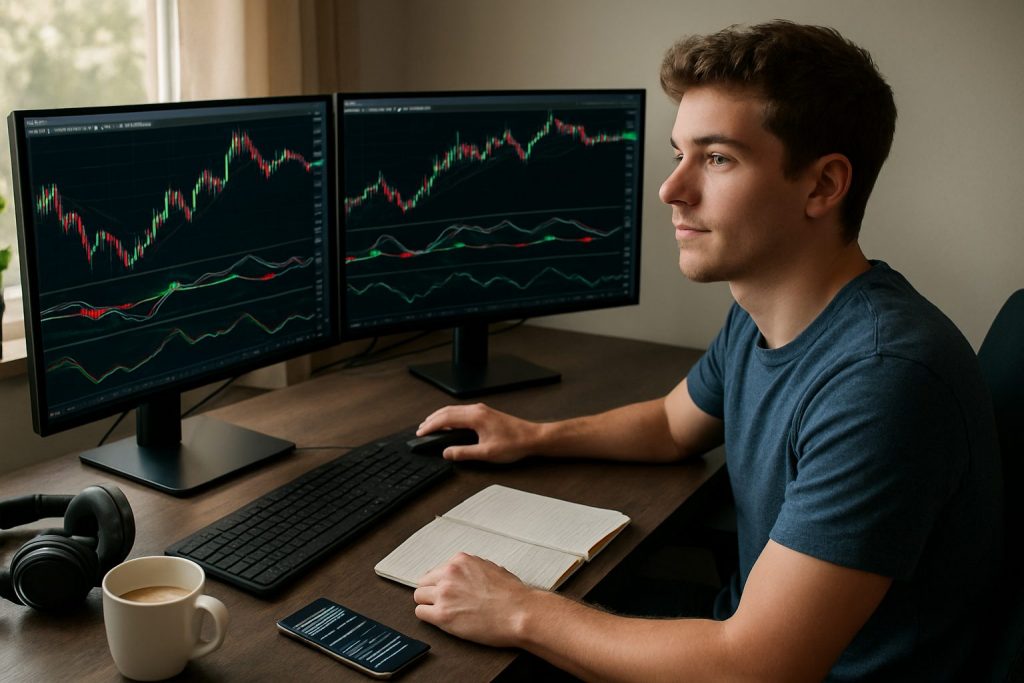
An aspiring trader, pictured here as Alex, used the web of tutorials, simulated trades and replay mode to move from random orders to a repeatable routine over three months. The discipline of daily review plus small-size contracts turned learning into reliable muscle memory.
Automation, backtesting and market analysis for beginners
Automation and backtesting are the bridge from discretionary entries to consistent, rules-based trading. For beginners, these capabilities are as much educational as functional.
- Automation teaches rule discipline: once a rule is coded, it removes emotion from execution.
- Backtesting reveals whether a strategy would have survived real market conditions.
- Market analysis tools assist in identifying macro drivers and intraday structure for better trade selection.
Begin with simple automated rules (stop, target, time filters) and validate them via backtesting before scaling. The insight Alex gained from replaying overnight sessions led to tighter risk control and clearer trade selection.
Practical steps to get started responsibly as a beginner
Actionable steps lower risk and improve learning outcomes. Small, repeatable actions lead to progress faster than chasing large returns.
- Open a demo account and commit to a practice plan for 30–90 days.
- Use backtesting and replay to test one hypothesis at a time.
- Keep position sizes small and document every trade in a journal.
- Leverage support resources and community add-ons to solve questions quickly.
- Review linked guides on realistic targets and demo use to form expectations:
is $10/day realistic?,
$100/day scenarios,
and extreme targets.
For capital planning and rules about pattern day trading or starting with small funds, these resources help clarify expectations: how much to start with, demo account strategies, and scenarios with $300.
Common questions and short answers
Does NinjaTrader offer a demo account? Yes — simulated trading is available and is one of the platform’s strongest beginner-friendly resources.
Are fees beginner-friendly? The low commission per futures contract helps keep practice costs down, but watch clearing fees and inactivity charges.
Is the learning curve steep? The interface is powerful and customizable; expect a moderate-to-steep learning curve, eased by structured practice and support resources.
Can beginners automate strategies? Yes — but start with simple rules, backtest thoroughly, and use simulated mode before live deployments.
Is NinjaTrader suitable for non-futures traders? NinjaTrader specializes in futures; those seeking stocks or forex directly will find the instrument set limited.

With over a decade of experience navigating global financial markets, I specialize in identifying trends and managing risk as a professional trader. My passion for economics drives my daily commitment to staying ahead in this fast-paced industry. Outside of the markets, I enjoy exploring technology like cryptocurrencies and new investment strategies.