Should beginners use automated trading systems? Yes — beginners can use automated trading systems, provided they combine sensible risk management, small starting capital, and thorough backtesting before live deployment.
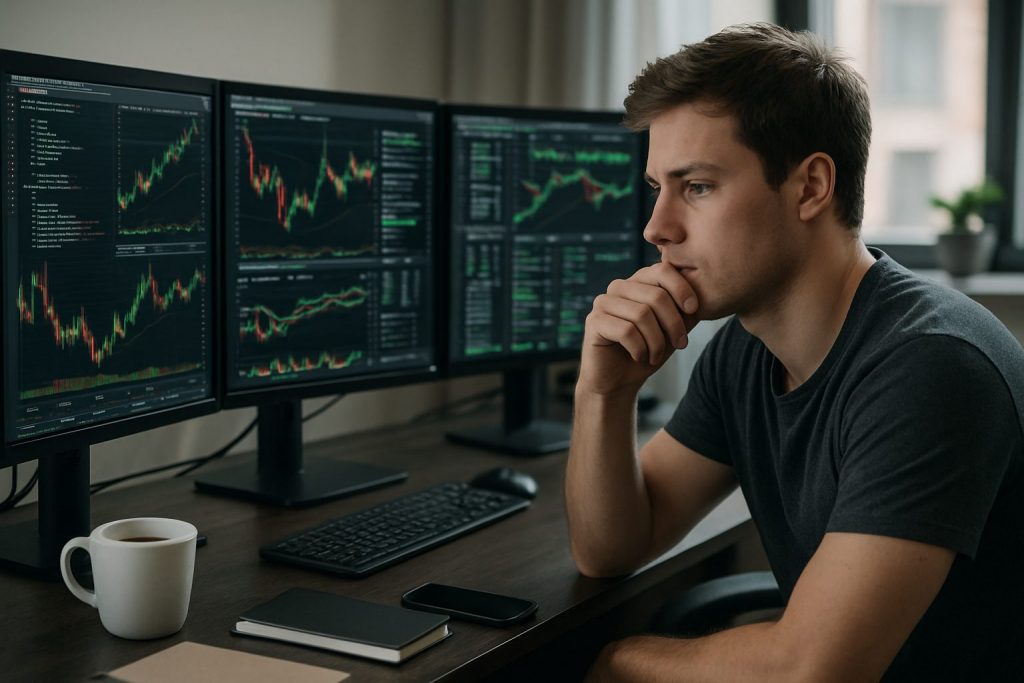
Automated trading is reshaping how newcomers approach markets: it offers speed, consistency and the ability to run multiple strategies without being controlled by emotion. For many beginner traders, algorithmic trading and trading bots remove impulsive decisions and free time for learning market structure. Yet the path from demo to live requires a clear plan: decide objectives, choose reliable auto trading tools, build a simple strategy, and test extensively. Real-world hiccups — technical outages, over-optimization, or market regime changes — are common and must be anticipated. This piece explains which automated approaches suit novices, how to set up robust trading systems, and which practical steps reduce avoidable losses while embracing the benefits of investment automation and modern financial technology.
Automated trading systems for beginner traders: benefits, limits and first checks
Automated systems offer clear advantages but also distinct limitations. A beginner who understands both sides can turn automation into an asset rather than a liability. Below are quick checks to run before trusting a bot with real money.
- Verify platform stability and connectivity.
- Confirm backtesting and out-of-sample testing availability.
- Ensure clear risk management rules (stop-loss, position sizing).
- Start on a demo account, then scale with small capital.
| Aspect | What beginners should check | Why it matters |
|---|---|---|
| Execution reliability | Stable servers, low latency, fail-safes | Prevents missed orders or runaway positions |
| Backtesting | Walk-forward tests, realistic slippage | Reduces risk of overfitting to historical data |
| Transparency | Readable rules and logs | Makes troubleshooting and improvement possible |
Practical example: a novice using a simple moving-average system will avoid catastrophic errors by setting maximum order sizes and ensuring the bot stops trading during connectivity loss. This single safeguard often turns a fragile system into a resilient one.
Key benefits of algorithmic trading for beginners
Automation delivers repeatability and time leverage. Instead of constant screen-watching, a disciplined system enforces the plan.
- Consistency: rules execute identically each time.
- Speed: auto trading captures fleeting opportunities.
- Scalability: multiple instruments can be monitored simultaneously.
For example, a trend-following bot can run across several currency pairs while a beginner studies market context, offering practical experience in building and refining trading strategies.
Best automated trading strategies for beginners: simple, testable approaches
Beginner-friendly strategies favor clarity over complexity. The following approaches are widely used because they are easy to code, intuitive to understand, and straightforward to backtest.
- Trend-following: trade with the prevailing direction using moving averages.
- Mean reversion: exploit deviations from a defined average using RSI or Bollinger Bands.
- Breakout: enter when price breaches key levels with volume confirmation.
| Strategy | Why beginners like it | Core risk control |
|---|---|---|
| Trend-following | Clear rules and long-run edge in directional markets | Trailing stop-loss and position scaling |
| Mean reversion | Works in range-bound markets and is intuitive | Use oscillators, tight stops and size limits |
| Breakout | Captures momentum surges with defined triggers | Filter false breakouts with volume or volatility checks |
Case study: a novice launches a mean-reversion bot across a liquid forex pair, backtests five years of hourly data, refines entry thresholds, then runs a three-month demo—this phased approach reveals weaknesses before capital is risked. That insight prevents early heavy losses and builds confidence.
How algorithmic trading and trading bots interact with modern financial technology
Modern financial technology integrates real-time feeds, cloud execution, and analytics, which democratize access to automation. However, every extra feature adds complexity and new failure points.
- Cloud vs local execution: weigh latency against reliability.
- Third-party modules: ensure code audits and version control.
- Monitoring tools: automated alerts and daily P&L checks.
Insight: choosing simpler components early reduces the surface for errors and accelerates learning about systems and market behavior.
How to start with automated trading: step-by-step for beginner traders
Starting simply and building rigor is the most reliable path. Below is a stepwise plan designed to protect capital while accelerating skill acquisition.
- Define objectives: expected returns, max drawdown, time commitment.
- Select a platform or provider (consider brokers like Pocket Option, Quotex or Olymp Trade for compatible auto trading features).
- Build or choose a simple strategy and set explicit rules.
- Backtest with realistic assumptions, then paper trade.
- Deploy with small size, monitor, and iterate.
Useful resources and practical reading can speed this process: a checklist on power and continuity, platform suitability, and trade-copier needs helps avoid technical pitfalls. For instance, see a guide on the importance of an uninterrupted power supply and platform suitability for day trading to prepare the technical side: do-i-need-a-ups-uninterrupted-power-supply-for-day-trading, platform suitability guide, and considerations on using trade copiers: do-i-need-a-trade-copier-as-a-beginner.
Practical safeguards and everyday rules for live trading
Automated systems require ongoing governance. Establish concrete rules and monitoring to stop small issues from becoming disasters.
- Daily health check: connectivity, data integrity, and logs.
- Hard stops: maximum daily loss and circuit breakers.
- Periodic re-validation: re-backtest after material market changes.
Tip: maintain a trading log (even in Excel) to document decisions, bugs and changes; tutorials on trading logs and recovery strategies are useful references: do-i-need-excel-for-day-trading-logs, recovery strategies.
Risks, common pitfalls and how beginner traders can reduce them
Automation does not remove market risk. A balanced view of the main hazards helps novices act responsibly.
- Over-optimization: avoid curve-fitting by using walk-forward testing.
- Technical failures: implement fail-safes and redundant connections.
- Market regime shifts: keep strategies simple and adaptable.
Practical example: an over-optimized breakout bot performed well on historical crypto data but failed during an unexpected liquidity shock. The lesson: diversify approaches and stress-test on extreme scenarios. For deeper reading on safety and whether bots are safer than manual trading, consult: are-bots-safer-for-beginners-than-manual-trading.
Behavioral and lifestyle aspects to consider
Trading impacts life beyond P&L. Consider mental health, relationships, and addiction risks when automation changes workload or stress profiles.
- Track how trading affects daily routines and relationships: can-day-trading-affect-relationships.
- Be aware of compulsive behaviors; automation can both soothe and enable excessive risk.
- Set clear work hours and stop-loss rules to protect wellbeing.
Closing insight for this section: automation should support balanced life choices, not replace them.
Resources, further reading and practical links for action
Curated resources accelerate learning while reducing exposure to misinformation. Use demo accounts, community code libraries and focused tutorials to learn safely.
- Check technical preparedness: UPS and continuity advice.
- Decide the need for copy trading or bots: trade-copier considerations and do-i-need-a-trading-bot-to-day-trade.
- Understand earnings expectations and realism: realistic income scenarios.
- Explore behavioral risks: addiction and trading.
Final practical note: keep experiments small, log everything, and treat early losses as learning costs rather than failures.
Questions & answers
Can beginners make money with automated trading?
Yes, but success depends on simple, well-tested strategies, disciplined risk management, and realistic sizing. Automated systems can amplify both profits and losses.
Do beginners need programming skills to start?
No. Many platforms offer plug-and-play bots and no-code builders. However, basic understanding of rules and logic helps diagnose issues when they arise.
Are trading bots safer than manual trading for novices?
They can reduce emotional errors, but they introduce technical risks. Managed properly with redundancy and stop rules, bots are a useful tool—see practical comparisons here: are-bots-safer-for-beginners-than-manual-trading.
How should a beginner limit downside when deploying a bot?
Use small sizes, daily loss caps, and proof-of-concept on demo accounts. Keep an emergency kill-switch and monitor logs daily.
Is automated trading appropriate for long-term investing?
Automated rules can support long-term plans, especially for rebalancing or systematic entry/exit. Align the strategy with investment horizon and risk tolerance before automating.

With over a decade of experience navigating global financial markets, I specialize in identifying trends and managing risk as a professional trader. My passion for economics drives my daily commitment to staying ahead in this fast-paced industry. Outside of the markets, I enjoy exploring technology like cryptocurrencies and new investment strategies.