Do I need alerts and signals for day trading? Yes — alerts and signals for day trading are extremely helpful for making timely decisions and improving a trading strategy, though disciplined traders can trade without them.
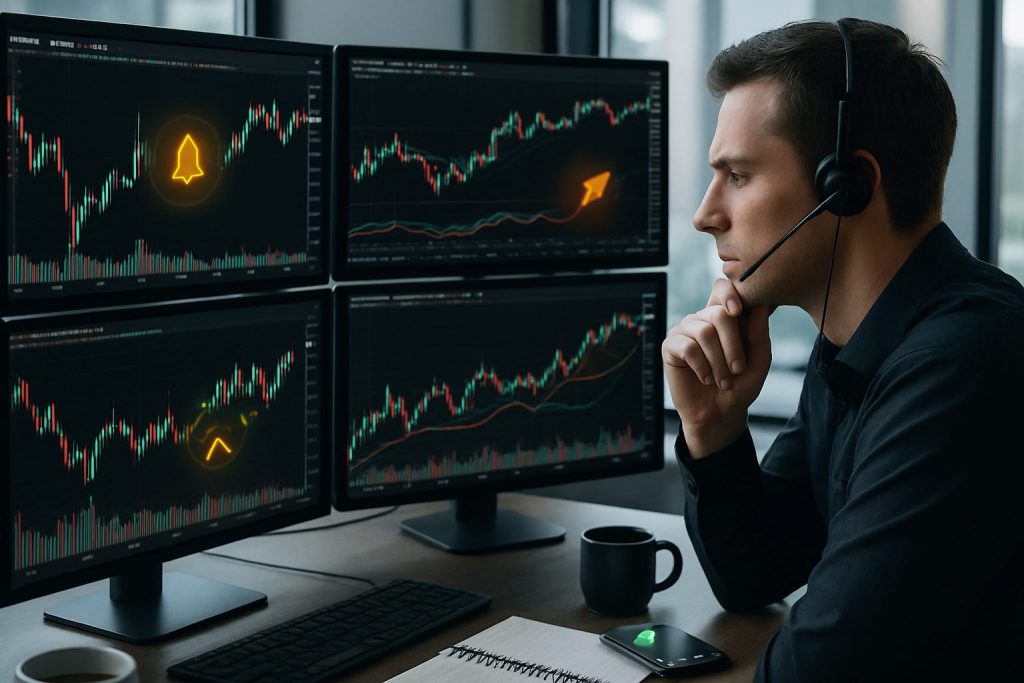
Day trading sits at the crossroads of speed, discipline and constant market analysis. In a fast-moving intraday environment, alerts and signals act as guardrails: they notify traders of setups, confirm technical indicators, and help execute trade signals with less emotional bias. For new entrants, signals are an educational scaffold that accelerates learning about volatility, volume and support/resistance behavior. For experienced intraday traders, real-time alerts enable a focused routine—scalping, range trading or news-based strategies—without staring at screens every minute. Combining automated alerts with a clear risk management plan and a tested trading strategy produces the best outcomes. Practical concerns—connectivity, news feeds and platform choice—matter too; pages on whether a cheap laptop, mobile internet, or 4G suffice for day trading give actionable guidance to pair with alerts: is a cheap Windows laptop good enough for day trading?, can I day trade with 4G? and can I day trade with mobile internet?
Why day trading alerts and signals improve intraday decisions
Alerts and signals convert market noise into clear actions by combining technical indicators with market context. They reduce hesitation on entries and exits, and highlight opportunities that might be missed during manual monitoring.
- Speed: Real-time alerts notify the trader the moment a moving average cross or volatility spike occurs.
- Discipline: Pre-set signal parameters enforce rules and limit emotional trading.
- Efficiency: Alerts let traders focus on execution and risk management rather than constant chart scanning.
Example: a trader using a 50/200 moving average cross alert can react immediately to a trend change, turning a possible late decision into a timely trade.
How alerts remove emotion and speed entries
Automated trade signals let the rules speak before feelings do. When a signal triggers, the trader follows a tested checklist instead of reacting to fear or greed.
- Define entry and exit rules using trading indicators.
- Set real-time alerts for those rules (price, MA cross, volume surge).
- Execute with predetermined position size and stop-loss to enforce risk management.
Key insight: alerts are not a shortcut to profits, but they are a structural advantage that supports a resilient trading strategy.
How to create and use trade signals for day trading
Building reliable trade signals blends market analysis, technical indicators and practical filters. A simple, robust approach typically wins: fewer parameters are easier to test and more adaptable to changing market conditions.
- Inputs to consider: moving averages, volume spikes, volatility bands, and chart patterns.
- Signal types: breakout alerts, MA cross signals, RSI overbought/oversold triggers, and news-driven alerts.
- Execution: pair each signal with a fixed stop-loss, profit target, and a max daily loss.
Many traders automate signals, but creating custom alerts teaches the market’s behavior. For technical help and tools, read whether AI tools or bots are necessary: do I need AI tools for day trading? and do I need a trading bot to day trade?
Key insight: start with a simple rule set, test on a demo, then scale signals into live trading while keeping execution and risk controls strict.
Choosing providers, indicators and rules for reliable real-time alerts
Not all signals are created equal. Provider quality, signal transparency, and the choice of trading indicators determine whether trade signals improve performance or create noise.
- Provider checklist: clear methodology, track record, delivery channels (app, SMS, email), and compatibility with preferred brokers like Pocket Option, Quotex, or Olymp Trade.
- Operational needs: stable internet and news feeds—see do I need high speed internet for day trading? and do I need news feeds for day trading?.
- Device considerations: evaluate whether an iPad or affordable laptop suits the workflow: is an iPad good enough for day trading?
Practical example: a signal provider sends a breakout alert during a scheduled economic release. The trader follows a pre-defined pattern: validate the alert with volume and volatility filters, place an entry with a tight stop, and lock partial profits at the first target.
Key insight: combine a disciplined trading strategy with vetted real-time alerts and strict risk management to convert signals into consistent edge.
| Signal Type | Main Indicators | Best for | Pros | Cons |
|---|---|---|---|---|
| MA Cross | Moving averages (50/200) | Trend-following day trades | Clear rules, low noise | Lagging in choppy markets |
| Breakout Alert | Price levels, volume | Scalping and momentum | Quick capture of moves | False breakouts without filters |
| Volatility Spike | ATR, price range | News-based trades | Captures big swings | High risk if unmanaged |
| RSI Reversal | RSI, divergence | Short-term pullbacks | Good for range markets | Can stay extreme in strong trends |
Practical checklist before relying on alerts and signals
Before integrating signals into live day trading, validate them through a checklist that covers performance, timing and risk.
- Backtest the signals over several months of intraday data.
- Run them on a demo account for at least 30–60 trading days.
- Confirm delivery reliability (app notifications, SMS, email).
- Verify compatibility with chosen brokers (Pocket Option, Quotex, Olymp Trade).
Additional reading on logistics and mobility: can I day trade while traveling? and can I day trade on Linux?.
Key insight: signals amplify skill only when paired with proper testing, robust delivery and strict money management.
Common questions about day trading alerts and signals
Are alerts and signals necessary to start day trading?
They are not strictly necessary, but they accelerate learning and improve decision speed. New traders benefit from signals to learn the rhythm of the market while practicing disciplined execution.
Will automated signals make day trading easy?
Automated signals remove some manual work and emotion but do not guarantee profits. Success still depends on signal quality, execution, position sizing and ongoing market analysis.
How many indicators should a day trading signal use?
Fewer is generally better. A compact set—price action + one or two technical indicators—tends to be more adaptable. Complexity can create overfitting and underperformance in live markets.
Can signals work on mobile connections like 4G?
Yes, with caveats. Reliable delivery and execution require stable connectivity; read about mobile options here: can I day trade with 4G?. Use local fallback plans for outages.
How to pick a provider that matches a trading strategy?
Look for transparent methodology, a demo period, and alignment between signal timing and the chosen strategy. Ensure the provider’s signals can be used with the selected brokers such as Pocket Option, Quotex, or Olymp Trade.

With over a decade of experience navigating global financial markets, I specialize in identifying trends and managing risk as a professional trader. My passion for economics drives my daily commitment to staying ahead in this fast-paced industry. Outside of the markets, I enjoy exploring technology like cryptocurrencies and new investment strategies.