
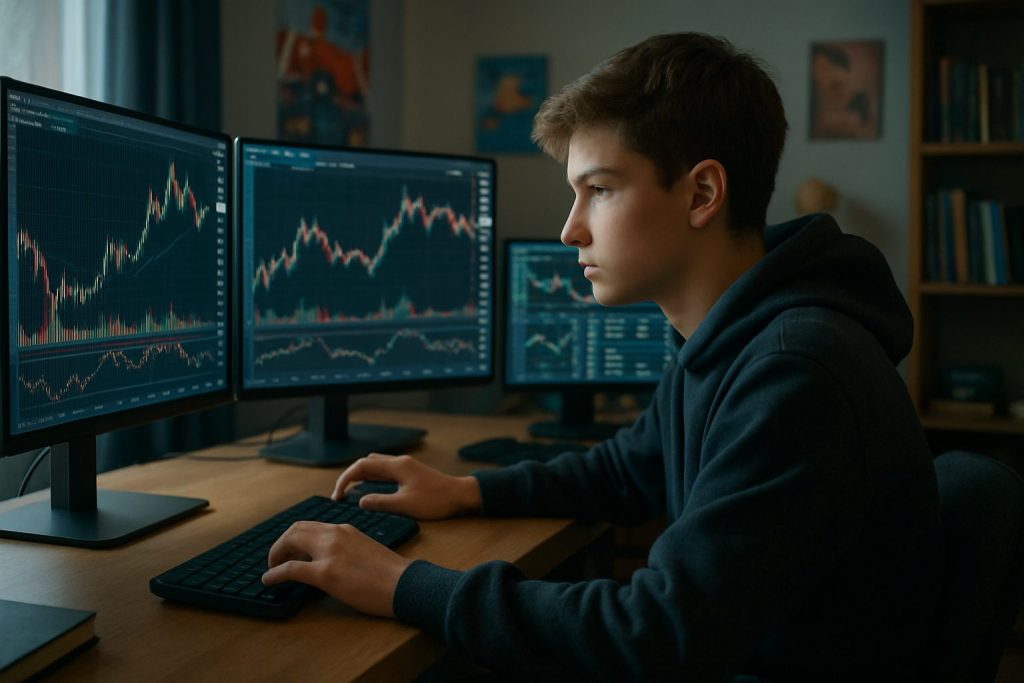
Can I day trade if I’m under 18? You generally cannot open a personal trading account before reaching the legal age, but a minor trader can learn and practise via custodial accounts, parental consent structures, and paper trading.
This content is not for US residents and focuses on international brokerage rules and platforms such as Pocket Option, Quotex, and Olymp Trade.
Curiosity about day trading often arrives well before the legal age to trade in one’s own name. For teenagers interested in the stock market and financial markets, the path is less about instant access to live capital and more about building skills, understanding trading regulations, and creating habits that survive market stress. Around the world the legal age to open a self-directed trading account is commonly the age of majority, which means minors must rely on adults, custodial frameworks, or simulated environments to gain experience. This short guide explains practical options for an under‑18 aspiring trader, outlines what parents and guardians need to know about parental consent and brokerage rules, and provides step-by-step ways to practise day trading safely without risking family capital. Expect concrete examples, checklists and a simple comparison table so a young learner and their guardian can turn interest into a sustained learning plan.
How old do you have to be to start day trading? — legal age and account basics
Most jurisdictions require reaching the legal age to sign financial contracts before opening a live trading account. That prevents an under 18 person from independently executing day trading in their own name. Below are the core facts and a quick checklist for readiness.
- Minimum age: Typically the age of majority in the country — minors cannot legally enter brokerage contracts.
- Why it matters: Brokers enforce brokerage rules and KYC procedures to comply with local trading regulations.
- Practical edge: Early study of markets yields long-term advantages once the minor reaches legal age.
| Age | What a minor can do | Typical account type |
|---|---|---|
| Under 18 | Learn, paper trade, trade via supervised account | Demo account / Custodial or guardian-managed account |
| At legal age | Open own trading account and trade live | Standard brokerage account |
Key checklist before attempting day trading when under 18
- Confirm the legal age for financial contracts in the home jurisdiction.
- Discuss parental consent and supervision with a guardian who will act as account holder.
- Start with a demo account on platforms like Pocket Option, Quotex, or Olymp Trade to understand order types and execution.
Insight: Age limits protect minors legally and financially — use the time before adulthood to build a durable process.
Legal pathways for a minor trader: custodial, joint and demo accounts
When a young person wants exposure to real or simulated markets, guardians and brokers provide legal frameworks that respect local trading regulations. The options vary by country but fall into familiar categories that balance access and protection.
- Custodial accounts / guardian-managed accounts: An adult opens and manages the account on behalf of the minor until they reach majority.
- Joint accounts: Less common, but some brokers allow joint control — the adult remains legally responsible.
- Demo (paper) accounts: Simulated trading environments that mirror live market behaviour without real capital at risk.
| Pathway | Advantages | Limitations |
|---|---|---|
| Custodial / guardian-managed | Real markets, ability to build long-term positions | Adult controls funds and decisions until legal age |
| Demo / paper trading | Risk-free practice, immediate access | No emotional learning from real losses or gains |
| Joint account | Shared learning and responsibility | Legal liability rests with the adult |
Insight: The safest routes combine adult oversight with progressive responsibility for the minor — leading to independent trading readiness by majority.
How to learn day trading while under 18 — practice, tools and routines
Becoming a competent day trader requires more than watching charts: it needs disciplined routines, tools that simulate reality, and honest reflection on mistakes. An adolescent can build these habits long before opening a live account.
- Paper trading daily: Treat each simulated trade as real — track entries, exits and outcomes in a trading journal.
- Structured learning: Follow courses, webinars and practice with guided watchlists to learn pattern recognition.
- Mentorship and review: Regular debriefs with a guardian or mentor accelerate learning and curb risky impulses.
| Tool / Method | Benefit | Practical example |
|---|---|---|
| Demo accounts on Pocket Option, Quotex, Olymp Trade | Real-time prices without capital risk | Place 10 simulated day trades per week and review outcomes |
| Market simulation tools | Teaches slippage and order execution impact | Run a simulated session with volume-based fills |
| Trading journal | Improves discipline and pattern recognition | Log every trade with rationale, result, and emotion rating |
Insight: Practice that mimics real constraints — time, fees, slippage and psychology — creates the fastest route from novice to capable trader.
Taxes, parental responsibilities and brokerage rules to check
Even when trading is supervised, financial outcomes create obligations. Parents and guardians must understand tax implications, record‑keeping and the brokerage rules that govern custodial or joint accounts.
- Tax reporting: Earnings from trading may be taxable; rules differ by jurisdiction and minors may be taxed under parental filings.
- Brokerage rules: Verify whether the broker requires proof of guardianship, residency, and specific documentation.
- Record keeping: Maintain detailed records of deposits, trades and statements to support any future tax or legal questions.
| Topic | Where to learn more | Action |
|---|---|---|
| Tax treatment of trading profits and losses | How day trading profits are taxed in Europe | Consult a tax adviser and keep transaction logs |
| Reporting and annual requirements | Self-employment and reporting questions | Clarify classification with local tax authority |
| Losses and deductions | How to handle trading losses for taxes | Track realized losses and consult a professional |
| Business structure questions | LLC vs other structures | Evaluate with an accountant if trading becomes substantial |
Additional resources on cross-border taxation and age rules include: how old do I have to be to day trade, do I need to report day trading every year, and regional tax guides such as taxation in Australia or India.
Insight: Treat trading as a financial activity with real reporting requirements — parents must lead compliance and teach fiscal responsibility.
Frequently asked questions
Can a minor open a live trading account alone?
No — a person under the legal age cannot open a personal brokerage account; access must go through guardian-managed structures or demo platforms.
What platforms can a minor use to practise day trading?
Demo or paper accounts on platforms such as Pocket Option, Quotex, and Olymp Trade offer realistic practice without capital risk; combine these with a disciplined journal to build skills.
Are there tax obligations for a custodial account?
Yes — gains, losses and dividends within custodian accounts can create taxable events. Consult the linked tax resources above and seek local professional advice to determine exact obligations.
How should parents supervise a minor trader?
Parents should set clear rules: approve all trades, maintain records, review the trading journal weekly, and limit risk by setting position sizing and maximum loss rules.
Is paper trading enough preparation for live day trading?
Paper trading builds process and technical skill but lacks the emotional weight of real money. Combine simulation with small, supervised real trades via a guardian to bridge the gap when appropriate.

With over a decade of experience navigating global financial markets, I specialize in identifying trends and managing risk as a professional trader. My passion for economics drives my daily commitment to staying ahead in this fast-paced industry. Outside of the markets, I enjoy exploring technology like cryptocurrencies and new investment strategies.